
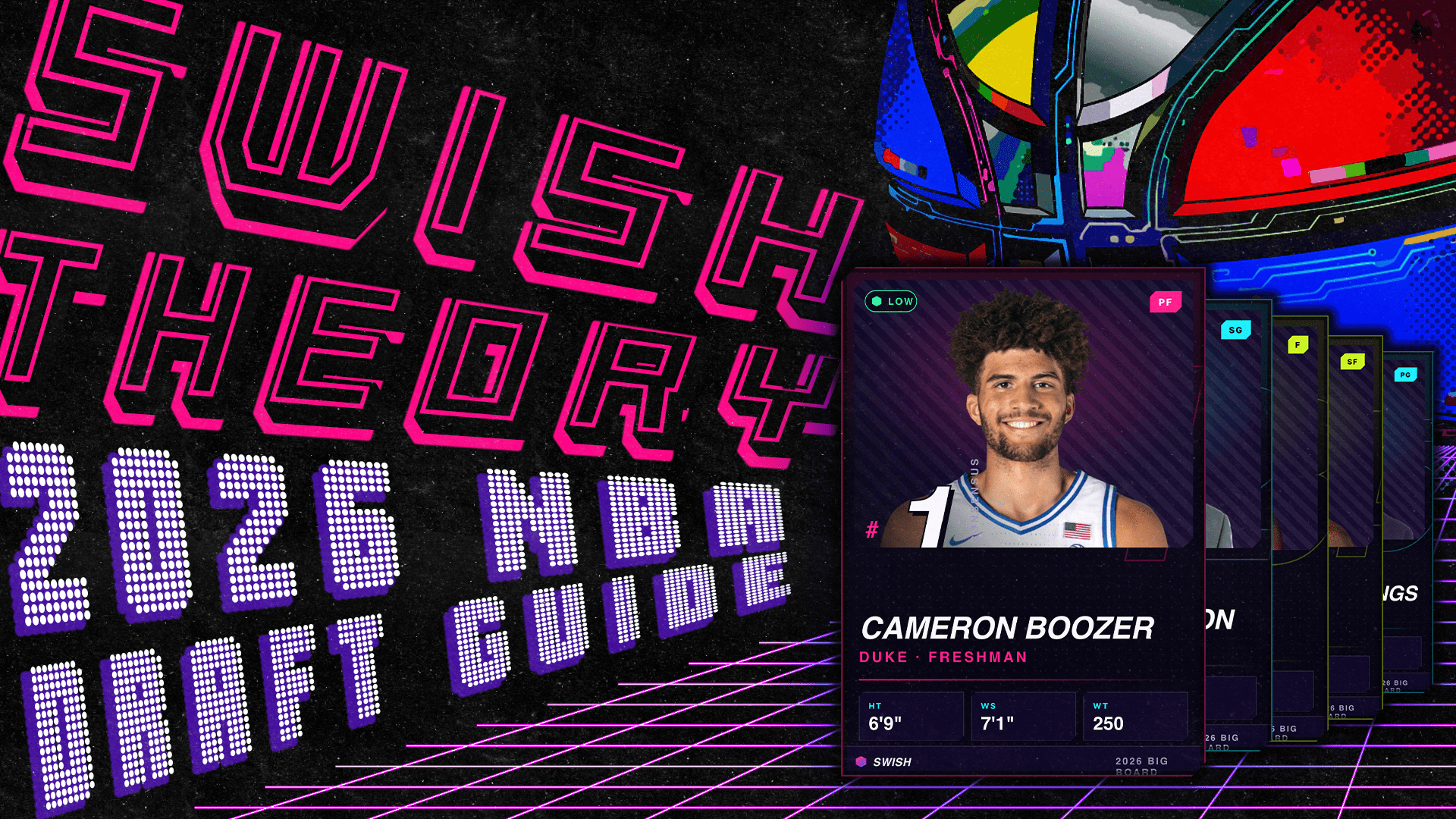
Swish Theory Scouting · 2026 NBA Draft Class
2026 NBA Draft
Guide & Big Board
Swish Theory’s fully-ranked big board of the 2026 class. Filter by position, fit, or how split the room is, then tap any player for the full breakdown. Last Updated: 6/21/26
Rank 1.
Cameron Boozer
Low
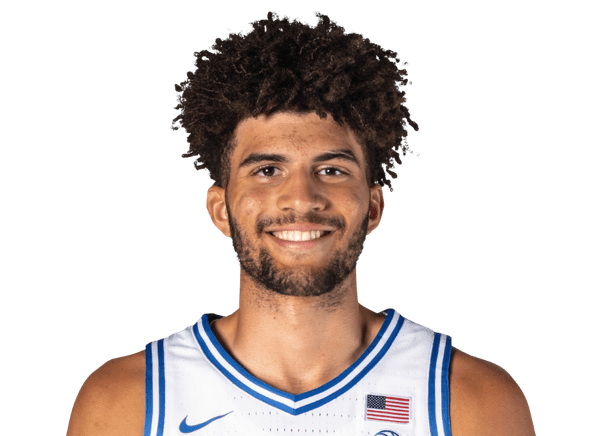
- HT6′8.25″
- WS7′1.5″
- WT253
Strengths
- 17.1 Box Plus-Minus (2nd highest of all NCAA players since 2008)
- 214 makes at the rim (only NCAA player >200 this season)
Concerns
- 2.2% block rate
- 1 for 10 on dribble-jumper twos
High on him
Cam Boozer is the best prospect in a loaded 2026 Class. He is a player that cannot be put into a box. There simply aren’t players with his intersection of power, versatility, feel, and production. This makes him the unanimous #1 pick on the Swish Theory Big Board.
Boozer is an absolute tank at 6’10” in shoes with a 7’1.5” wingspan. He’s 253 pounds and knows how to use his frame to create advantages. He’s a monstrous post scorer who punishes mismatches and forces his way through opposing bigs. As a driver, he has superb body control and can dislodge defenders with his overwhelming strength. And Boozer also creates plenty of second-chance opportunities with his aggressiveness on the offensive glass. 332 rim attempts is monstrous volume, especially for a guy with such a hefty creation load (57% of his makes at the rim were unassisted). Even if the bigs he’ll face in the league have more size, it’s hard to imagine an 18-year-old with his historic level of dominance not excelling against pros.
But Boozer isn’t purely a bruiser – he’s a versatile offensive weapon. He can drive and create his own shots at the rim. He can run inverted pick-and-rolls and get to his spots. He can operate as a short-roll and DHO hub. He can let it fly from deep. 39.1% from three on 6.5 attempts/100 and 78.9% from the foul line are insane shooting indicators for a guy whose reputation is being a bully baller.
Boozer posted a 25.6% Assist Rate this season, a number that undersells his ability to facilitate and direct traffic. His timing is exceptional, finding open cutters and shooters on the perimeter and making accurate reads on the move. Boozer’s understanding of angles and ability to find teammates with a versatile array of deliveries is incredible for any prospect, much less a 6’10” Freshman. He takes care of the ball and is a step ahead of where the chess pieces will slide on the court. This feel also extends to the defensive side of the ball, where he has strong positioning and pesky hands to force turnovers and deflections.
That isn’t to say Boozer doesn’t have his flaws. He isn’t a great vertical athlete, limiting his potential as a primary rim protector and lob threat on the roll. He’s a sturdy handler and creator, but certainly doesn’t have the off-the-dribble shooting chops of Darryn Peterson or AJ Dybantsa. But Boozer’s dominance at every level he’s played cannot be ignored. Even if his highlights aren’t as aesthetically pleasing as some of the others in the #1 pick conversation, Boozer’s grit is special. He’s the king of the little things who also happened to be the undisputed best player in the NCAA. That’s a combination that is tough to put a ceiling on.
— WillLow on him
There isn’t a metric that Boozer didn’t crush this year. He led the nation in PRPG, BPM, RAPM, BPR, and he leads every single draft model I’ve seen. His combination of rebounding and passing is probably the highest signal intersection, and he paired it with elite scoring efficiency.
And yet, it’s not immediately obvious within the profile of a player who shot 62% on 2s and 39% from 3, but Cam’s biggest weakness may be his scoring upside.
The first, and most obvious limiter: Boozer’s height and athleticism are at a crossroads. He’s 6’9 with a sprint and standing vertical that ranks closer to average for centers rather than forwards. This can also be said about his scoring profile.
Boozer lacked any rim scoring counters other than going up for a shot. He was in the 1st percentile of runner frequency and 2nd percentile of hook frequency. More concerning was his utter lack of a midrange shot. He shot just 1/10 on dribble-jumper 2s across the season. This is fairly non-forward-like.
His rim scoring is the main red flag. His rim percentage is a pedestrian 64.5%, despite being assisted on 43% of his rim looks. This is a concerning combination, because it indicates that Boozer neither scores efficiently enough nor self-creates enough as a rim scorer. Moreover, Boozer’s rim inefficiency and lack of verticality converged with a concerning “blocked rate”: 8% of his rim attempts were blocked, which ranked in the 33rd percentile nationally. Altogether, given that Boozer has a completely undeveloped non-rim counter, and that the vast majority of Boozer’s points came as a rim scorer, his below-average finishing rate and blocked rate are concerning signals.
Unfortunately, Cam’s worst stretch of the season came with Duke’s highest leverage minutes. On paper, he played more of the 5 with Ngongba out, but this was reflected in a playtype shift consistent with a guard initiator. From March 12th onward (first game without Ngongba), Boozer shot a concerning 52% at the rim, and a whopping 15% of his shots were blocked, which ranked in the 4th percentile nationally. To do it at 6’9 without a huge diet of unassisted rim attempts is catastrophic. The games against Virginia and UConn were especially telling, as he was blocked a staggering 12 times. In these games, Boozer’s “cognition” indicators were also concerning: he averaged 4 turnovers per game (2nd percentile) with a 1.1% steal rate.
Many of these blocks did come as a quasi-creator, particularly on drives out of PnR and isolation. But this encompasses the problem of role. It is virtually impossible to expect Boozer to continue taking such a heavily rim-skewed shot diet with his relative rim scoring mediocrity and lack of center height. To reach his “upside”, he will need to find a more creation-oriented role. He can get to the rim, and he can shoot decently, but the lack of midrange counter coupled with his multi-fake-heavy stance rim-creation style makes it difficult to completely trust his 2P translation.
So even with his elite AAU and NCAA 2P%, Cam’s scoring profile isn’t especially reliable at any of the 3 levels, with questionable rim scoring, limited midrange counter, and average 3P volume with slow release. Neither is his defensive production, highlighted by average stocks.
Despite all-time production, Boozer’s scoring and defense could limit his upside.
— Avinash
Rank 2.
Darryn Peterson
Medium
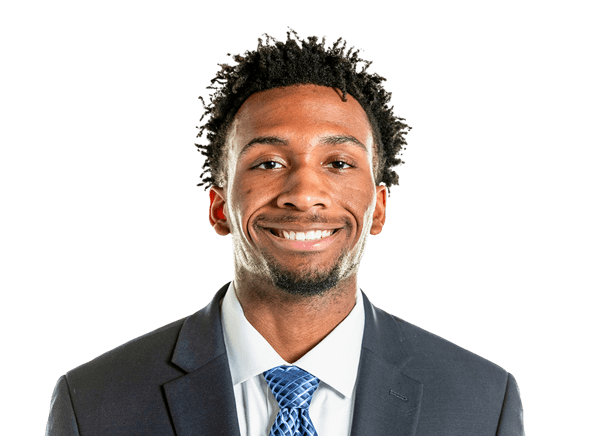
- HT6′4.5″
- WS6′9.75″
- WT199
Strengths
- Highest three-point volume of any high major player with his stocks rate
- 94th percentile guarded catch-and-shoot efficiency at 81st percentile guarded rate
Concerns
- 0.40 assist rate to usage ratio
- 0.54 field goal attempts at the rim per midrange attempt
High on him
An electrifying talent, Darryn Peterson is one of the best guard prospects in recent memory.
The defensive playmaking is excellent, the downhill potential is immense, the 3pt shooting prowess shined in college, and the individual shot creation middy pull-up priors speak for themselves. The head-to-head high school marquee matchups vs Dybantsa and Boozer were legendary.
Peterson has as much potential as anyone in the draft due to his high floor as a D&3 high-impact guard mixed with a high ceiling as a star scorer. Darryn’s off-the-dribble self-creation superpowers could ignite in any moment, despite mostly staying hidden due to unfortunate circumstances with health and conditioning at Kansas reportedly affecting his play. While Peterson creates advantages with ease, he often looks to score first and pass only if needed, which can limit his offense’s flow.
With a healthy return to form, Peterson is a potential self-creating 3pt sniper superstar with real defensive upside to match, delivering a likely floor as a two-way starter if he can get his body right, with potential as high as All-NBA & All-Defense on both ends, a clearly elite talent who can take over any possession any moment.
— RKLow on him
Billed as a generational guard prospect, Peterson seemed to live up to expectation. After all, Darryn had the highest box-plus minus of any freshman guard since 2008. Darryn led his team to the 4th seed and the precipice of the Sweet 16. Darryn has a unique blend of defensive playmaking while sustaining offensive load. Clearly, Darryn projects as an high-impact NBA guard with huge upside.
While many of these points are salient, this final sentence is most tenuous. Is Darryn actually high-impact? Is he even a guard?
Darryn’s passing was simply not consistent with a guard. He posted just a 12.5% assist rate on monstrous usage, and it’s difficult to find any positive analogs amongst guard-sized players. Some of this could be excused. Kansas was poorly spaced, and he wasn’t blessed with obvious safety valves upon facing help. But this sort of assist to usage rate for a 6’5 player is historically bad, to the point that it cannot be excused simply by virtue of a limiting offensive ecosystem. Assist to usage is an important indicator.
Much of his poor assist to usage rate has to do with his quick-trigger shooting. Darryn has a difficult diet of self-creation, taking early looks regardless of coverage intensity. This can be construed as a positive; he is a clearly efficient pull-up shooter. But without taking more stable shots, Darryn’s offensive output may be more prone to variance; so much of his offensive impact is based on making shots.
And while Darryn was objectively efficient, his 57.8% TS on the career is closer to great than elite. His team-wide impact was especially weak: Kansas was +5.5 points better on offense with Darryn off. While on/off numbers are sometimes viewed as unreliable, much of it has to do with a limited “off” sample and defensive noise. For example, Dylan Harper had a neutral on/off rating at Rutgers, but it was strongly weighed down by a large defensive swing, and the “off” sample was nearly three times smaller than the “on”. We cannot make the same considerations for Darryn.
This is the fundamental issue. While Darryn takes tough shots and makes them at an above average rate, his enormous usage makes him disproportionately responsible for the team’s offensive outcomes. When he’s at monstrous usage, takes more than twice as many midrange attempts as rim attempts (one of the more fundamental prospect red flags), and passes at a historically low rate, his team’s offensive floor is low. Even Kobe was well above a 20% assist rate from 2000 onward; in the last 2 months of the season, where Darryn appeared healthier, he had just a 10% assist rate on 52.7% TS.
For Darryn to reach the lofty expectations implied by his draft slot, there will be a necessary exchange of quick-trigger shotmaking for meaningful passing growth.
— Avinash
Rank 3.
Caleb Wilson
Low
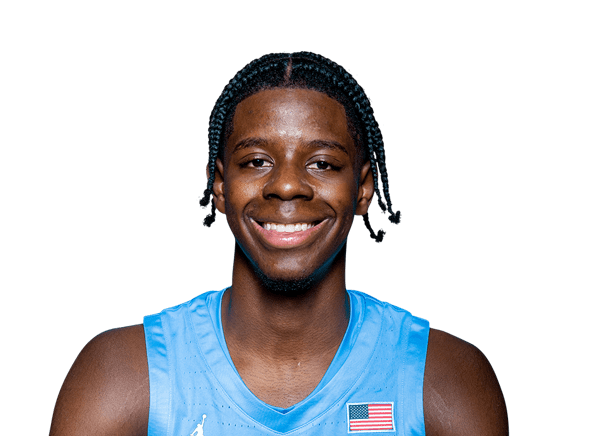
- HT6′9.25″
- WS7′0.25″
- WT211
Strengths
- 67 dunks in 24 games (most per game in NCAA this season)
- 2.9 stocks per game (1.5 steals, 1.4 blocks)
Concerns
- 68th percentile Defensive RAPM
- 9.2% three-point attempt rate
High on him
Caleb Wilson has the kind of prospect profile that is normally reserved for first overall picks, but had the misfortune of being in a draft with three more hyped players who can also lay claim to the top spot. Wilson finished his freshman year at UNC with per-40-minute averages of 25.1 points, 11.9 rebounds, and 3.4 assists (pace adjusted). Since 1990, only five draft picks have averaged more than 24, 10, and 3 per 40 minutes, and four of them were taken first: Cooper Flagg, Victor Wembanyama, Andrew Bogut, and Larry Johnson. The odd man out is Alperen Sengun, who is first in the 2021 draft class in value over replacement. On top of this simple “P/R/A” query that already puts Wilson in exclusive, elite territory, he carried a 62.6% true shooting percentage, a 2.7% steal rate, and a 4.3% block rate. Wilson’s 12.7 box plus-minus places him eighth among high major freshmen since 2008, and is notably better than both A.J. Dybantsa and Darryn Peterson. The only question with Wilson is how he fits in the pros as a skinny, 6’9” guy with a traditional power forward skill set, but he is too good not to give the benefit of the doubt, and it is not out of the question that he develops a decent perimeter game.
— WafeLow on him
Caleb Wilson is an intriguing prospect who can’t rank too low on anyone’s board. After all, he had a productive freshman season, even if hand injuries cut it to 24 games. But does his statistical profile actually guarantee the high floor/high ceiling most seem to peg him for? I’m not convinced.
My draft model, PRISM, has Wilson 6th, and one of the shakier signals is that his box score production seems to significantly outpace his “pure” impact. This shows up most on defense. His DRAPM sits in the 68th percentile while his DBPM lands in the 95th. Single-season RAPM should be taken with a grain of salt, since prospects are adjusting to new context and the residuals are fairly large, but the film backs up the gap. The blocks and steals give the impression of elite event creation, yet the motor underneath is inconsistent. He flashes dominant stretches and then disappears for possessions at a time, taking plays off and skipping second efforts.
With the more structural defensive flaws of other prospects in this draft, like Cameron Boozer, AJ Dybantsa, and Darius Acuff, Wilson’s defensive flaws have flown under the radar, but they remain a very strong question mark going into his rookie season.
Of course, Wilson still has a myriad of positive traits in his profile – he went from a steady and consistent passer to a creative one over the course of the season, and his ability to get to the rim shows up both in the stats and film. Still, with the defensive concerns and some of the inconsistencies with his shooting, there is a real outcome where Wilson struggles to return positive value for his draft slot.
— Joseph
Rank 4.
AJ Dybantsa
High
- HT6′8.5″
- WS7′0.5″
- WT217
Strengths
- 25.5 points per game
- 34% usage rate
Concerns
- 1.9% stock rate versus top 100 teams
- 0.2 Defensive Box Plus-Minus versus top 100 teams
High on him
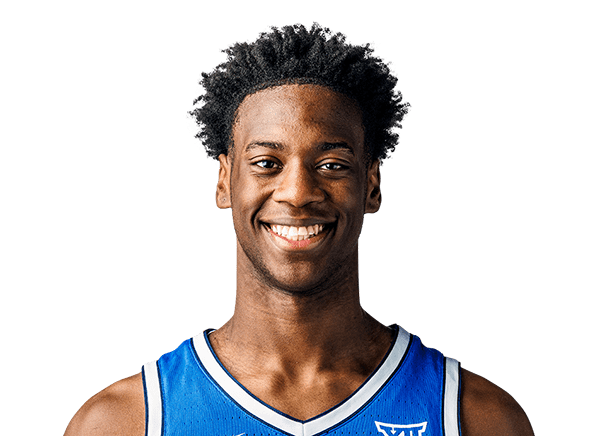
A.J. Dybantsa led the NCAA in points per game as a young freshman, and is a rare prospect with the potential to one day do the same in the NBA. Blessed with a massive frame (6’9”, 7’0” WS), elite athleticism, and an array of iso moves that would make Drew Hanlen blush, Dybantsa is one of the best scoring prospects to enter the league in some time. Although prone to tunnel vision, A.J. does have the creative passing ability (4.2 assists per 40 minutes) to make defenses pay for overplaying or double-teaming him. A big scoring forward straight out of the 90’s/00’s era- think Carmelo Anthony or Tracy McGrady- Dybantsa is more comfortable in the midrange than beyond the arc (4.7 3PA per 40, 33% 3PT%), however he is such a handful getting to the rim and drawing fouls (9.5 FTA per 40) that he was able to manage 60% true shooting despite relatively inefficient shot selection. Though maligned for his lack of defensive impact at the college level (1.6 stocks per 40), I find it hard to believe that a player with his size and athletic ability can not be a decent team defender, at least to the point where it does not detract from his offense a la Melo. Perhaps the best present-day comp for Dybantsa is 2026 Jaylen Brown sans Jayson Tatum, who averaged 28.7 points on his way to an all-star nod and second team All-NBA. While Brown falls short of superstar-level impact, this would still represent an above-average outcome for a top pick.
— WafeLow on him
The upside with AJ is fairly obvious. His NBA Combine numbers were quite good, particularly his vertical and sprint times. He weaponizes this athleticism as a scorer, leading the nation in points per game while only being assisted on a small fraction of his field goals. With a strong handle and decent passing numbers, he looks certain to step into a high-usage role and become one of the highest volume scorers in the NBA.
While it’s easy to get caught up in the rarity of skill, the reality is that efficient collegiate self-creation is less robust of a skill singularity than other traits.
AJ was certainly efficient (60% TS on 33% usage), but this intersection alone doesn’t guarantee top pick status: 4 other freshmen in this class had exceptional TS and USG intersections. Much of AJ’s allure has to do with his elite athleticism and frame, which makes his scoring efficiency appear more novel. The central question is whether AJ’s scoring novelty is being conflated with an indication of higher upside. A secondary, more generalizable concern is whether the upside justifies ignoring the downside.
AJ benefited from an early-season stretch against some of the worst teams in the nation. In 5 games against Cal Baptist, UC Riverside, Pacific, Abilene Christian, and Eastern Washington, AJ averaged nearly 3 steals and 6 assists per game while going 22 for 22 at the rim. AJ crushing these teams should never be construed as a negative, though. Every HM player technically has these opportunities.
However, AJ has one of the strongest differences between his full-season and conference/competition splits that I’ve ever seen. He shot just 50% on 2s with a 1.2% steal rate against top 100 teams, but 57% 2P and 1.7% steal rate on the season. Compare this to two players commonly cited as cautionary examples of relying on intra-season splits:
Dylan Harper put up 54% 2P & 2.8% steal against top 100 teams; 57% 2P & 2.6% steal overall.
SGA put up 50% 2P & 2.6% steal vs top 100 teams; 49% 2P and 2.8% steal overall.
These stats were chosen not only because they usually have strong signal, but because they encompass AJ’s strengths and weaknesses. Both his 2P and steal rate nosedive against good teams, in a way that even the exemplars of comp-dropping success stories never approached.
The 2P scoring drop can be attributed to his increased midrange reliance, along with a dive in rim efficiency. While the latter is expected, the former has historically been a strong bust indicator. Nearly twice as many midrange attempts as rim attempts in these games gives AJ a concerning offensive floor.
It also makes his downside scenarios scarier. It would appear highly difficult to “scale” AJ down for the reasons given. Additionally, his poor catch-and-shoot numbers extend back to AAU, and his stocks indicate a low degree of awareness (as well as effort). He has identical stocks to Darius Acuff against top 100 teams, though he’s usually a more engaged on-ball defender.
With a massive midrange reliance, poor stock rates, and sub-PG passing, it’s unclear what position AJ will play. Though there were times where it was less than ideal, elite efficiency as an “engine” appears to be the antidote to these concerns.
— Avinash
Rank 5.
Kingston Flemings
Medium
- HT6′2.5″
- WS6′3.5″
- WT183
Strengths
- 99 out of 100 Combine Score (Tawny Park Metrics)
- 35% assist to 12% turnover rate in conference play (3.0 assist-to-turnover ratio)
Concerns
- 0.50 three-point rate plus free throw rate
- 1st percentile in floater frequency
High on him
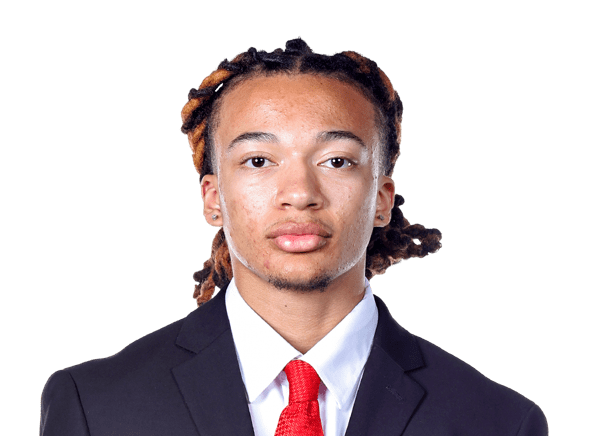
Kingston is a fun player to write about. The one outright disappointing number is his wingspan, only an inch longer than his 6’2.5’’ height. But he is still a potentially dominant athlete. Flemings’ vertical score of 91.3 was tops of likely first round guards (Mikel Brown second at 88.5) and his agility score of 91.5 was #1 for that group, too (Burries second of likely first-rounders, at 73). Not to mention, he has a case for the highest feel prospect in the draft. Who was also top ten in NCAA Box Plus-Minus as a freshman.
My case for Flemings is that he deserves genuine consideration once Cameron Boozer is off the board, even when placed against AJ Dybantsa, Darryn Peterson and Caleb Wilson. Flemings was the undeniable offensive leader for Houston’s #15 offense (per BartTorvik), making them the #5 team in the country as his defense was not overly damaging on the country’s #3 defense. Their offensive scheme was plodding, relying on pull-up twos and rarely running in transition. Flemings provided the talent, skill and feel to make the offense work. In his minutes, Houston ran the 11th best offense in the country; when he sat, 71st.
Kingston wins with speed and high-value passing, boosting their rim rate by 7 percentage points and 6 percentage point better rim finishing, and transition rate by 12% with 47% better efficiency. Houston is a totally different offense with him on the court. Comparing him with past Houston lead guards, Kingston did not have quite the volume as senior Jamal Shead, but also had a lower turnover rate while being far his junior. Shead just turned in an excellent passing season for the Toronto Raptors, with a 31% assist rate and 4.0 (!!!) assist-to-turnover ratio. I’d expect Flemings to at least replicate those numbers, an ultra-quick decision maker who naturally flows into advantageous positions.
Flemings was average or better efficiency as a scorer in his top four play types, in order: pick and roll ball handler (78th percentile), spot up scorer (84th), isolation (52nd), transition (82nd). His free throw percentage finished at 85% and three point percentage at 39%, both very good for a lead guard. The biggest red flag is his combination of low three point volume (5.6 threes per 100 possessions) and low free throw rate (28). However, both are at least somewhat a function of the Houston system, where he would initiate first, more of a bail-out scorer self-creating towards the end of the clock, with a very low team free throw rate (355th) and mediocre 3pt rate (153rd). With his strong outside shooting percentages, I think more volume will come easily. Additionally, he was still able to draw a free throw on drives 41% more often than turning it over. Kingston is both physical and smart, and I like to bet on those players.
What’s keeping me from being 100% bullish on Kingston is his 183 pound frame (lacking lower body strength) and 6’3.5’’ wingspan. Flemings will, much like on offense, be very speed-reliant on defense. That will lead him to having a decent floor for getting steals, and he even swatted 12 shots on the season, but he will also be easy to take advantage of when faced against bigger scorers.
Flemings stands out among the guards in this class by combining athleticism and feel with production and self-creation. His intensity and intelligence on the court bode well for him finding consistent ways to contribute in the pros. In the worst case scenario, he’s just an okay scorer, but I trust his passing will be safely elite. This is the type of offensive leader you bet on: one you can trust will find a positive way to start a possession with the capability of ending it.
— PowLow on him
Easily the most concerning aspect of Kingston’s game is his finishing.
He was one of the worst finishers in the nation to close the season, and he shot just 53% at the rim in conference play. What makes things more concerning is his limited foul-drawing ability. Poor finishing doesn’t necessarily preclude scoring inefficiency; a sufficient rate of free throws will act as a true shooting buffer. Some relevant examples of this include Trae Young and a pair of Kingston’s contemporaries: Keaton Wagler and Ebuka Okorie.
However, with just a 27 free throw rate on the season, Kingston was unable to finish shots at the rim or draw fouls when he got there. It is somewhat difficult to get to the rim in Kelvin Sampson’s system, which emphasizes the offensive rebounding of short-area intermediate shots via two-big lineups.
The optimistic skew on this is that Kingston got to the rim more than these players. The pessimistic take is that many Sampson-coached guards thereby relied on floaters to buoy their efficiency. Houston ranked in the 99th and 100th percentile across the last two years in floater frequency. Despite having ample opportunity to take floaters, especially out of pick and roll, Kingston ranked amongst the 1st percentile of all D1 players in floater frequency. His poor rim finishing, lack of runner counter, and poorness in drawing fouls can all be tied to his difficulty in deceleration; he struggles to control his body as he approaches the rim, leading to some worrying misses.
The low free-throw rate is a problem in the halfcourt, with Kingston drawing a respectable 0.45 FTr in transition. It’s even more concerning with his limited three-point volume, meaning that his low foul-drawing rate comes on a two-point-centric shot diet. Kingston is athletic and reasonably sized, so some degree of rim scoring improvement can be expected. But his extremely short arms (+1 wingspan) may deflate his rim upside.
Kingston is a special prospect at everything outside of scoring. He is a tenacious rebounder with even better priors, his FT and 3P shooting percentages are superb, and he had one of the best 1&D playmaking seasons ever. All as a cerebral defender with excellent stock rates. He is well positioned to be an advanced stat darling. His rim scoring upside does appear limited, however, and he will likely need elite shooting to make up for the lack of rim scoring and foul drawing. While this is certainly possible given his percentages, he simply doesn’t take enough threes for this to be a comfortable projection. And in a league with arguably more supply than demand for the PG position, inefficient scoring could meaningfully limit his upside tail.
— Avinash
Rank 6.
Yaxel Lendeborg
Low
- HT6′8.75″
- WS7′3.25″
- WT241
Strengths
- 15.1 Box Plus-Minus, the 7th best high major season since 2008
- 156 pick and roll possessions including passes, with 94th percentile efficiency
Concerns
- 20.5% usage rate
- 4.6 three-point attempts per 100 possessions
High on him
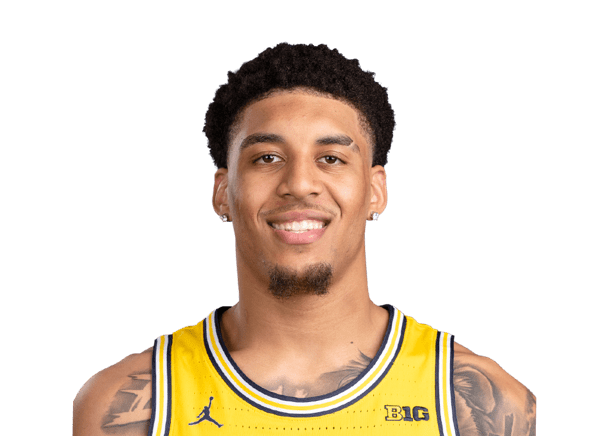
Yaxel Lendeborg is one of the most polarizing prospects in this year’s draft, and on the surface, it’s not hard to see why. He’s in his sixth college season, and despite his very strong past production, only popped into mainstream conversation this season.
Still though, it’s a bit obvious that Yaxel is not your typical “old” college player — while the normal older college prospects tend to still have glaring holes in their game, it’s hard to identify one for Yaxel. He should be able to enter the NBA and make an impact almost immediately, with a strong and improved perimeter defense projection and an improving face-up game.
When I did some research on Yaxel last season, it was obvious that he maintained a versatile impact in areas outside of scoring, leading D1 players in fastbreak rebounds, which turned out to identify a number of high performing rookies. That version of Yaxel probably should have gone in the first round of last year’s draft, which doesn’t shed the age concerns entirely but gives me more optimism that he has met his developmental checkpoints at the right times.
Age is an issue — in fact, as one of the more modeling heavy evaluators, it plays a bigger role for me than anyone else. Despite that, Yaxel’s ranking in most draft models hasn’t really fallen very much, as opposed to other old prospects. It’s also worth noting that draft models are likely to underrate older players in the NIL era, with the training set skewing towards younger players before there was the incentive to stay in school. Given this bias, it’s likely there is a major edge for Yaxel in the draft prospect “market”.
— JosephLow on him
I’m sure the high-case writer covered all of the age-related draft paradigms that Yaxel Lendeborg breaks. Despite the undeniable risk associated with drafting 23-year-old-plus prospects highly, he’s simply too good at basketball to completely fade. However, his profile contains some notable warts related to his high-end outcomes.
Lendeborg starred defensively at Michigan (and at UAB before that), dominating as an off-ball playmaker and secondary rim protector this season. His size, speed and strength let him roam and cause chaos away from the ball, but his stiffer hips and average lateral quickness inhibit his ability to guard smaller players.
While he shot the ball effectively for the Wolverines, this was Yaxel’s first year attempting a high volume of 3-pointers. His shot variety and willingness to shoot from range, alongside strong free-throw shooting, predict shooting growth, but his 286 career 3-point attempts still fall short of a representative sample.
He boasts the processing and court vision to create shots for others, but a shaky handle and some aforementioned stiffness likely limit his playmaking to transition and connecting. If Lendeborg’s threes aren’t falling, will he have the dribbling talent to add value offensively on the perimeter?
Most of these concerns are admittedly nitpicks. Even on the lower end, it’s tough to imagine a player as dominant, physically gifted and intelligent as Lendeborg flaming out. But his age, and those limitations on both ends of the floor, might cap his ceiling at a role-player level. That’s nothing to scoff at, but some might want to swing bigger atop a loaded draft.
— Ben
Rank 7.
Keaton Wagler
Low
- HT6′5.0″
- WS6′6.25″
- WT188
Strengths
- 48 free throw rate
- 6.7% offensive rebounding rate
Concerns
- 10% defensive rebounding rate
- 0 for 1 on dunk attempts
High on him
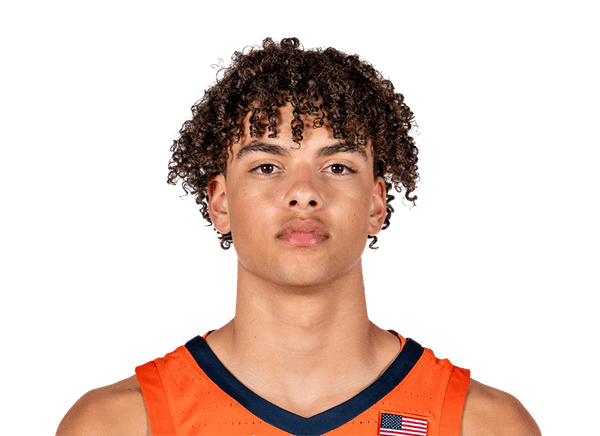
Keaton Wagler remains the most polarizing prospect in this year’s draft, with a very jagged profile that has scared some very smart analysts away. Let’s start with the primary anti-Keaton Wagler argument: he doesn’t generate enough space on his drives, which leads to his poor two-point scoring profile.
Of course, that’s not poor logic: two-point scoring (Keaton was 57.5% at the rim, which is genuinely below average) is usually an okay proxy for advantage creation. Still, Keaton pairs the poor two-point scoring with a fairly high free throw rate, which suggests there may be more to his profile than immediately meets the eye. Film analysis shows that Keaton does have issues with acceleration, but he usually pairs that with very few wasted movements and a keen eye for gaps in the defense. The free throw rate suggests that defenders do have trouble dealing with his somewhat unconventional movement patterns, and it places him in the “very good” camp for rim pressure.
Another argument against Wagler is that his stats are somewhat inflated by playing in a team-friendly system, which has some credence, but that type of context-driven thinking should be extended to other stats as well, like his lack of dunks, blocks, and steals. Many have used those stats to make the case that the athletic disadvantages are too much for Keaton to overcome, but his team context has more than likely played a massive role in that as well. Illinois ranked 346th in EvanMiya’s true tempo. Avoiding fouls is a part of Illinois’ gameplan, so they force relatively few turnovers and break into transition less than other teams. In the other stats that would suggest athleticism and feel, like offensive rebounding, Wagler has shined, ranking in the 90th percentile amongst historical freshman guards. I think Wagler’s event-driven defensive production might be deflated, which could provide an even more robust floor for him during his career.
This is important to recognize Wagler’s greatest strength as well. He doesn’t have to turn into a creator to become a positive NBA player. With his strong three-point shooting, offensive rebounding, and steady passing, he can function as both a strong creator or secondary guard, which will allow him to contribute early in his rookie contract, if not in his first year.
— JosephLow on him
Based on historical evidence, considering Keaton Wagler as a top-7 prospect seems like a necessity, and yet I have him just outside the lottery. The reason? There’s a good chance that 2026 Illinois was the best offensive context college basketball has ever seen.
Constantly having one of the Ivisic brothers on the court at center is a luxury that no ballhandler in the world has. They are the only 7-footers in Barttorvik history to put up >9 3PA/100 and 80% rim FG%.
The principles Underwood has implemented have created one of the best league-relative offensive ecosystems in the world, with high shooting gravity (T30 in 3PAR for two straight years) and offensive rebounding from the perimeter. Wagler’s OREB% may seem like an outlier at first glance, but every guard gets O rebounds when playing for Underwood. For reference, consult Kylan Boswell’s OREB numbers before and after joining Illinois.
Illinois’ emphasis on shooting and, specifically, stretch 5s also aids their 2P%, making Wagler’s 46% 2P% vs. T100 comps even more concerning. Putting up 10 DREB%, 0 dunks, and a 48% 2P% on the season makes Wagler functionally smaller than he actually is, and, alongside his poor anthros, more or less forces him to stay on-ball and become a “big ballhandler.” How valuable is being a “big” ballhandler, though, if you rebound, dunk, and finish like your <6’2” peers?
— Lukas
Rank 8.
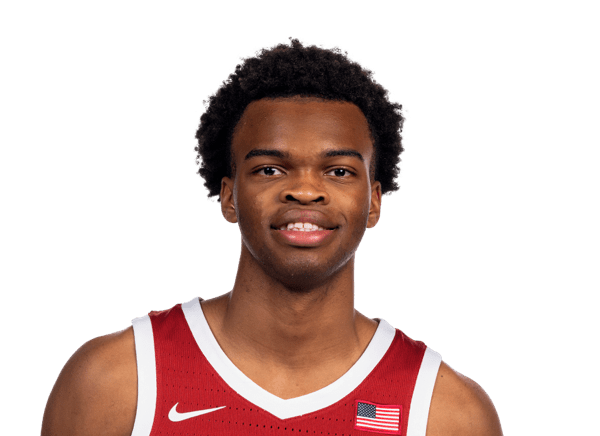
Ebuka Okorie
High
- HT6′1.25″
- WS6′7.75″
- WT186
Strengths
- 117 self-created rim makes over the season (3.8 per game)
- Lowest turnover percentage (10.4%, tied with Peterson) of any high major freshman with 30%+ usage on record since 2008
Concerns
- 0.79 assist rate to usage rate ratio
- 1.6 Defensive Box Plus-Minus
High on him
An athletic 6’2” guard, Ebuka Okorie might be the most reliable advantage creator in the class due to his outlier quick first step burst, masterful ball-handling, lights-out shooting, impact indicators, and his next-level feel for the game.
He ranks historically well in turnover suppression among players with his level of impact and creation load. He ranks as one of the best players in many impact metrics such as age-adjusted BPM, 2026 NCAA BPM, and Cerebro C-RAM. He shows 3pt rates and rim rates that indicate a potential high-volume 3pt shooter and rim scorer. The two most efficient shots are where most of his shots come from, with the self-creation ability to create, take, and make shots in-between when it matters.
The list of Okorie’s proven capabilities is long. He:
Rarely turns the ball over
Dunks with ease
Forces steals & turnovers without fouling
Gets to any spot he wants, including the rim, at will
Has an efficient shot profile with a masterful ability to self-create
Creates efficient looks for teammates on kickouts
Runs offense as a pick-and-roll maestro, and
Scores efficiently in nearly every playtype.
Okorie looks to become a walking paint touch pick-and-roll maestro pull-up 3pt shooting sniper who can beat any defense thrown at him with pristine decision making and skillful execution.
A rare off-the-dribble threat with one-on-one superpowers, blending speed, skill, and decision-making, Ebuka presents a unique challenge for opposing defenses. His two-way talent and all-around skillset projects him to to be a good basketball player right away and a potential star offensive engine down the road.
— RKLow on him
Ebuka Okorie is a fun bet: he has elite handles, doesn’t turn the ball over, and has strong athletic tools. 31 high-major NCAA players took 450 or more shot attempts this season: Okorie’s self-creation rate of 79.5% was the highest of them all (Dybantsa 75.3%, Flemings 74.3%, Philon 73.7%). However, his rim efficiency (56%) was below average for that group of 31 highest volume shooters, his deep two percentage (42%) just above average, and three point percentage (35.4%) just below average. With a poor assist rate (24%) for a guard with the ball in their hands that often (30% usage rate), one has to ask the question: does Okorie really deserves the high usage he needs to return lottery value when he is in the pros?
I think that’s very much an open question. While his six-factor RAPM will certainly see a turnover aversion boon, and a likely increase to his opponent’s turnover rate through his 6’7.75’’ wingspan, his influence on rebounding and opponent true shooting will be negative, and boost to his own team’s shooting efficiency questionable. It’s betting on a narrow path, one where Okorie’s self-creation ability translates into a good efficiency development curve, enabled by elite handle and body control. It’s betting that his 84.5% free throw rate will translate into very good three point shooting, though an elite free throw percentage is nothing unique in this class.
Defensive Box Plus-Minus has a great track record of sorting out busts, and Okorie’s +1.6 is similar to Tyrese Maxey, Jaden Ivey, Malik Monk, far below some of the other guard bets in this class (Flemings and Burries) though still clear of Acuff and similar to Philon and Christian Anderson. Simply put, he’s nothing special for a guard, which likely means a drag on his overall impact.
Do you trust Okorie to initiate as a primary option? If the answer is no, I would be very wary of taking Okorie in the lottery, given low passing volume and likely negative defense.
— Pow
Rank 9.
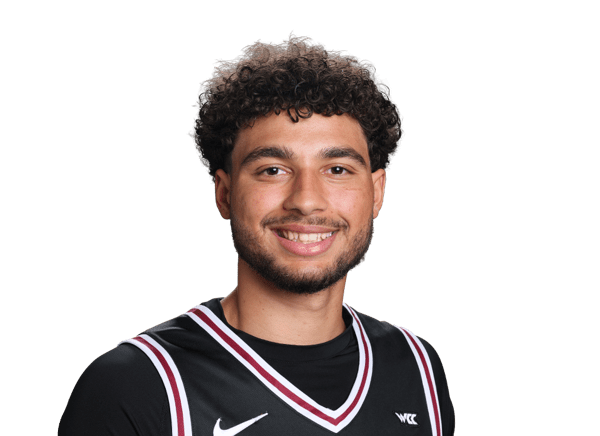
Allen Graves
High
- HT6′7.75″
- WS7′0.0″
- WT226
Strengths
- 13.9% offensive rebound rate
- 4.9% steal rate
Concerns
- 5.3 fouls per 40 minutes
- 62.7% assisted scoring rate
High on him
The high case for Graves starts with his unprecedented mix of size, youth, and cognition. No one has even come close to Graves’ > 2.5 AST:TO, > 4.5 STL%, and > 4.5 BLK%. Yet that doesn’t scratch the surface of Graves’ unique profile. He’s at the precipice of perhaps the steepest development curve I’ve ever seen. Heck, just one year ago he had to redshirt. People use this as a knock against Graves and I honestly don’t get it. For one, he’s a normal age for a freshman prospect. Second, and more importantly, this implies a ludicrous development trajectory. Graves emerged from the redshirt cocoon as a uniquely gifted prospect.
In fact, Graves’ 16.2 BPM during conference play was second only to Cam Boozer. Graves also boasted a 3.3 AST:TO ratio (!!!), 5.4 TOV% (!!!), 5.4 STL%, 4.1 BLK%, and a 16.4 OREB% (!!!). Oh, and by the way, this was with INCREASED offensive responsibility (24.4 USG%). These numbers dwarf the already impressive season-long numbers, showing that Graves hit another gear later in the year.
Like I said: perhaps the steepest development curve I’ve witnessed in real time.
Now, the eye test brings about some questions. Graves doesn’t yet have the functional strength you’d like him to have as an interior finisher or defender. A wing skillset will be crucial for him to maximize his offensive impact at the next level. Defensively, I have real concerns despite the gaudy stock numbers. In particular, he left a lot to be desired as a help side rim protector. Opponents were confident driving the ball at a rotating Graves and exposing his lack of strength and vertical athleticism. Graves fouled a lot as a result. Graves’ athleticism can and will improve in the NBA. But, that doesn’t preclude evaluators from pointing out clear warts in Graves’ defensive skillset.
Graves’ detractors say the steal and block numbers don’t tell the whole story on defense. No argument here. However, stocks (along with assists and turnovers) are the ultimate statistical indicators of feel. As we’ve already outlined, Graves’ youth, cognition, and size combination is damn near unprecedented. We also saw Graves vault to rarely-before-seen college impact and cognition heights in the middle of the season. With this steep development trajectory, there’s no telling how much better Graves will get. For me, the stock numbers fuel this overwhelmingly positive development narrative as an indicator of outstanding feel; they’re not a Trojan Horse for a negative defensive player.
Projecting Graves’ role at the next level is a futile exercise because he’s a rapidly moving target. I’m betting on a surging player and trusting that trajectory to continue. Pure and simple. The all-time greats in basketball history started with a baseline of either outlier work ethic, outlier cognition, or both. I can’t pretend to know Graves’ work ethic behind the scenes. The rate of improvement bodes well on that front. What I know for sure: Graves is a case of truly outlier feel for the game and impact staring us in the face.
I get it. Graves 5th is a hot take, and it might blow up in my face. There’s some great players further down my board who’ll get drafted higher. None of them have some of the hall-of-fame upside indicators of Allen Graves.
— MichaelLow on him
Despite ranking Graves lowest in our group, I still view him at or above consensus. However, my late-first/mid-lottery grade on him sits below the draft internet consensus. His statistical production at a young age undeniably matters, headlined by his offensive rebounding and ludicrous defensive playmaking. However, the context around his sterling spreadsheets leads me to be somewhat skeptical of how his superpowers translate.
Players with truly elite traits often translate better to the league and at higher levels than their peers and Graves’s off-ball defense reaches that bar. Santa Clara deployed Graves as a roamer, aggressive ball-screen defender and back-line rotator and profited as a result. His defensive savvy away from the ball evokes thoughts of Robert Covington and Matisse Thybulle.
He lives in a forward’s body, unlike those two wingier counterparts, with legitimate athletic deficiencies that could cap his ceiling. Even against competition less athletic and physically imposing than most other prospects, limitations in changing directions in space and exploding laterally repressed his sage-like instincts.
Graves wields those instincts to relentlessly crash the offensive glass and create shots for others as a connective passer. He’s a fairly promising outside shooter, though his subpar athleticism and poor handle may siphon him into an off-ball spacer role early on. Could that shift depress his offensive impact as it did for Grant Williams in the pros?
And yet, despite these genuine concerns, his high-end traits, youth and elite statistical production are too strong to fade too heavily. Development is never guaranteed, but an idealized version of him will help NBA teams win the gravely valued possession battle and construct elite defenses around him as a keystone piece.
— Ben
Rank 10.
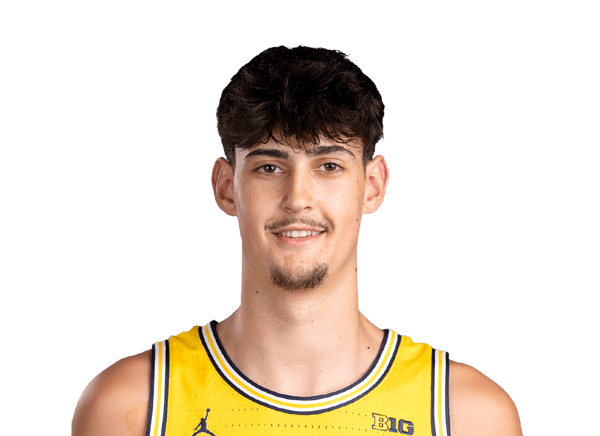
Aday Mara
High
- HT7′3.0″
- WS7′6.0″
- WT260
Strengths
- 12% block rate
- 19% assist rate
Concerns
- 18.2% turnover rate (career)
- 58.5% free throw percentage (career)
High on him
Aday Mara’s anthropometric and statistical profile closely aligns with Roy Hibbert, one of the best pure rim protectors the league has ever seen, but who unfortunately also happened to be one of its worst 2-point scorers among bigs.
Conversely, Aday Mara has just come off one of the best finishing seasons in recent history, with 81 dunks and an 81% rim FG%. Furthermore, he did have a positive influence on his team’s rim frequency and accuracy this year (+4.5% frequency and +2.7% rim FG%), making me confident that he won’t run into the same issues as Hibbert, at the very least. This offensive floor of 2-point influence, combined with historically being one of the highest-volume passers among bigs ever (with plenty of high-value rim assists) at 7’4″ (!!!) in shoes, is intriguing on its own—but it becomes a top-10 package when acknowledging that he is one of the best rim-protection prospects ever.
In 800 possessions vs. T220 comps without Morez Johnson on the court, Michigan’s opponents had a mere 23.2 (!!!!!) rim frequency, 20.5 FTR, and a 49.4% rim FG%, as opposed to 33.6% frequency, 32.7 FTR, and 56.6% rim FG% in the off-sample populated by not one but two NBA-level bigs. The best teams in the league try to limit variance by focusing on the least variance-prone and highest-value area on the court: the rim. There is no other player in this class that provides the same rim influence as Aday Mara.
— LukasLow on him
Mara has a lot of appealing traits. He is massive, at 7’3’’, the tallest in the class. His 9’9’’ standing reach exceeds Ugonna Onyenso, second place, by four inches. Mara uses this trait to contribute excellently in two ways: he can block a ton of shots on defense, and pass or shoot over opponents as on offense. Mara’s block rate of 12% was fourth of all high major players. His 19% assist rate (2.4 per game) was second to Nate Bittle among seven-footers, and first among anyone 7’2’’+. As a scorer, Mara’s 68% from two leads any high major player with 175 or more two-pointers made.
So, what’s the issue? I find the value proposition falls short of earning a top 10 selection on a few fronts. First, the turnovers. Michigan ran a lot of their offense through Mara as a passing hub, with his assist rate increasing from 14% as a freshman, to 17% as a sophomore, and now 19% as a junior. However, despite this improvement and reputation as a great passer in draft circles, Mara’s assist-to-turnover ratio has never surpassed 1.2. The tape does not reveal an advanced processor, to me, as he has some bad turnovers where he looks completely out of sync. He is smart with angles, knowing just when his teammates get open, but can he be relied upon to make crucial decisions in the clutch?
My second gripe is that the margins are thinner than you would think for a 7’3’’ player. His wingspan-to-height ratio is in the 21st percentile for Combine centers, with his 7’6’’ wingspan tied with that of 6’11.5’’ Nate Bittle. He is also a bad athlete, with 16th percentile standing and vertical leaps for his position, 15th percentile shuttle run time, and 8th percentile sprint, all adjusted for the center position. His saving grace is his strong lane agility time, 73rd percentile for a center, and reinforcing the notion that he’ll be an elite drop defender. But the poor length and athleticism overall mean his dominance is less convincing. Additionally, while his weight is good for position, he still appears to get pushed around much more than you’d like, a big reason his career defensive rebounding rate of 20% is very poor for his size. Even when the great rebounding Morez Johnson sat, Mara’s defensive rebounding rate was only 21%.
Additionally, while Mara has great touch at the rim and has been solid on good midrange volume, his career 58.5% free throw percentage will be a persistent drag on his efficiency. This gives the defense a constant “out” when they are caught in a disadvantegous position when he’s near the hoop. His career 45.8 free throw rate is hardly imposing for a player of his size who is constantly in the paint, perhaps suggesting some lack of aggression as a consequence of avoiding poor efficiency free throws. While Morez Johnson had a 22.1% rate of getting to the line compared to 13.2% turnover rate as a roll man, Mara had 10.6% and 13.6%, respectively. This is not a physically imposing big.
Finally, Mara only got 22 steals across his 1,635 NCAA minutes. This, especially in tandem with his high turnover rate, does suggest some feel limitations. Mara is a subpar athlete for his position and has real holes in his game, with sub-elite feel and never playing more than 60% of his team’s minutes. In a strong class, that is a tough risk to make in the top 10.
— Pow
Rank 11.
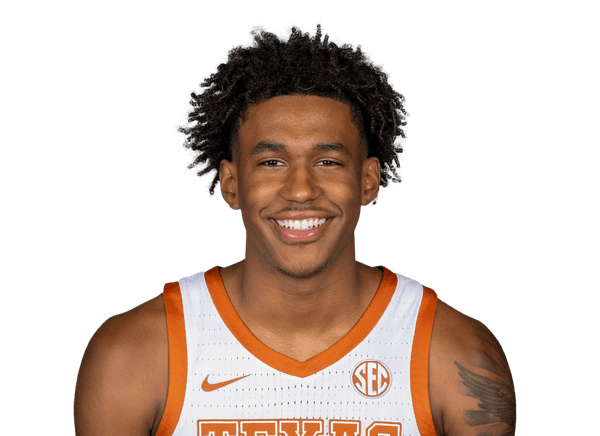
Dailyn Swain
Low
- HT6′6.5″
- WS6′10.0″
- WT211
Strengths
- 3.3 rim assists per game
- +6.8 relative true shooting on 80% self-assisted shot diet
Concerns
- 18% turnover rate
- 4.7 threes per 100 possessions
High on him
Wings are the hardest position group to evaluate in the draft, and the difficulty is intrinsic rather than incidental. When elite, a wing combines the best attributes of a guard and a big, creation, versatility, and the ability to defend multiple positions without the limitations of either. This is why teams circle over each other at draft time to grab one, and why year after year GMs get burned chasing the next Kawhi Leonard. The bust rate is high because it is genuinely a developmental position and prospects rarely arrive with the full skillset intact, which forces evaluators to project skills that may never materialise. What makes Dailyn Swain different is that most of what you’d normally be projecting is already there.
Swain is the rare wing who pairs an NBA-ready body – 6’8″ in shoes, 211lbs, 6’10” wingspan, 8’9″ standing reach – with an NBA-ready game. This physical baseline gives him a margin of error that allows him to take the floor in an NBA game right now. The headline of Swain’s game is his advantage creation: 7.2 half-court advantages per 100 possessions at an 81.1% success rate, sixth in this class across a 418-possession sample (per Ben Pfeifer). He got to the rim six times a game on an 80% unassisted shot diet, converted 60% from two and 48% from midrange, shot 81% from the line on a 52% free throw rate. He also posted a 1.49 ppp perimeter cut rate at the 96th percentile and a 1.56 ppp big cut and roll rate at the 99.7th, showing his ability to farm role player buckets. My favourite Swain tidbit though is his passing vision and feel. His PnR passing grades at the 93rd percentile and he averaged a 93rd percentile 3.3 rim assists per game, where his craft, aptitude for angles and on-ball creativity led to some noteworthy dimes. The result of this was his ORAPM sitting at the 93rd percentile.
So, why isn’t Swain getting more lottery buzz? Because there are some very valid, and real, concerns, chief among them being his poor three point shooting. Swain has never shot above 35% from three across three college seasons and has never exceeded five attempts per 100 possessions. This is not because he can’t make them, as his free throw and midrange numbers prove, but because he simply doesn’t want to take them. His release has a hitch and a slow delivery speed that will need structural correction if he’s going to stay on the floor at the next level. His turnover avoidance grades at the 8th percentile, and his DRAPM at the 41st percentile. His block rate this past season also dropped to 1.0, and his defensive motor showed lapses away from the ball, where he was susceptible to cuts and late closeouts that a player with Swain’s athletic base shouldn’t be doing.
What gives me hope with Swain, and why I’m so high on him, is that the majority, if not all, of these weaknesses can be explained by Swain being overtasked with usage and creation on a Texas team where he was clearly the best on-ball option. Swain’s methodical style of creation and pace aversion, likely born out his fear of early clock threes, meant Texas ranked in the 43rd percentile for pace, with defenses loading up to take away his immense driving threat. That context manufactured the turnovers, where he was forced into overdribbling into contested situations when the open shot isn’t being accepted. In his freshman and sophomore seasons, at sub-20% usage, Swain posted a 3.0 and 2.3 block rate respectively, and his defensive metrics were uniformly higher, showing that the motor is genuinely there and the lapses came with the offensive burden. In an NBA role where he’s a secondary initiator and off-ball mover rather than the primary option, the creation load drops, the pace question becomes irrelevant, and what remains is a player whose touch, feel, and finishing efficiency were never usage-dependent to begin with. The shooting and turnover issues are real, and will probably mean that Swain is unlikely to be given many on-ball reps early doors, if ever. However, the intersection of outlier self-creation and physical gifts, combined with healthy touch, passing and feel indicators are as good a guarantee as you get that these issues are fixable, and I find it hard to imagine a world in which he isn’t an impactful NBA player at worst, with a ceiling that few other players in the draft can rival.
— BrandonLow on him
The appeal around Dailyn Swain is easy to understand. He produced one of the greatest wing creation seasons in NCAA history, converting nearly 60% of his twos despite self-creating 86% of them in an environment with little tempo, ball movement, and spacing. He also displayed high cognition and baseline defensive activity through an 2.8% steal rate. The only 6-foot-6 and taller draft picks to self-create at least 80% of their twos, convert over 55% of them, while maintaining a 2% steal rate are Scottie Barnes, Dylan Harper, and Dailyn Swain. Swain’s two-point self-creation rate and his two-point percentage both rank first among this group.
Swain will be the oldest prospect on draft night among that group, but this is an undeniably preposterous wing creation profile. Yet, I do not have Swain in my lottery. What gives?
Turnovers and missed rim attempts — which mimic the effect of turnovers — found my skepticism of Swain. High-leverage wing creators that aid winning do not post 17.3% turnover (to 20.9% usage) rates and shoot 63.4% at the rim for their career. Both of these issues existed during Swain’s freshman and sophomore seasons, and though 13% turnover and 68% finishing rates during this season’s first eight games were encouraging, regression to the mean netted him 20% turnover and 63% finishing rates for the next 27 games. Swain has produced negative on-off net rating swings for three straight seasons; producing the two worst committable actions on offense on volume is the primary cause of that.
The secondary cause is the additional flaws in his defensive profile, beyond the negative effects that turnovers and missed layups already have on defense. While a monstrous 21% defensive rebound rate and 3% career steal rate theoretically provide Swain with immense defensive upside, this would be ignorant of his yearly declining block rates and terrible career on-ball defense. 3.8% to 2.3% to 1.1% block rates derive the first claim, and his team’s defense allowing a higher rim attempt rate, rim conversion rate, free-throw attempt rate, and assist-to-turnover ratio with him on the floor across three seasons evidence the second. Collectively, they indicate that his presence as an on-ball defender and rim protector makes it easier for opponents to penetrate and finish at the rim, yet another explanation for his weak on-off impact.
Swain’s rim protection and on-ball defensive badness have less to do with his defensive projection (as elite defensive rebounding and turnover-generation give him a neutral-impact floor) and more with his positionality and role projections. With the jumpshooting volume and turnover economy of a taller power forward but the finishing and rim protection values of a smaller wing, Swain is left without a position or role to impact within. Each draft pick that shared this intersection of flaws but succeeded in the NBA were either all-time great offensive guards as a freshman (John Wall and Shai Gilgeous-Alexander) or garbagemen whose outlier offensive rebounding and defensive values relative to position were clear in college (Victor Oladipo, Kyle Anderson, Kris Dunn, Alex Caruso). Those left in between the two roles never reached a single season of positive impact: Michael Carter-Williams, Anthony Black, Dillon Jones, Wendell Moore Jr., and Jaden Springer.
Swain’s mediocre combine performance further emphasizes his lack of a role. His 6’6.5” height and 6’10” wingspan are terrible dimensions for a power forward, but the aggregate of his agility and vertical tests are dead-average for a small forward and don’t enable much garbageman upside. With all this being said, however, his overall integration of size, functional athleticism, downhill scoring, and touch is still far better than those mentioned in the aforementioned “bust” list. This integration likely cancels out a fair share of his bust downside, but his lack of a position or role on either end has to then cancel out his high-end outcomes too.
Ultimately, I think Swain will stick around as a decent bench player, whose three-point volume, turnovers, and defensive limitations greatly limit his impact. My consternation lies in what I believe to be a widespread distribution of outcomes with an underemphasized right tail, both of which combine to suppress the median outcome. I would not invest a lottery pick in such a distribution.
— Maurya
Rank 12.
Bennett Stirtz
Medium
- HT6′2.5″
- WS6′6.0″
- WT186
Strengths
- 61% true shooting on 26% usage (past two seasons)
- 29% assist rate with 2.6 assist-to-turnover ratio (past two seasons)
Concerns
- 26% rim frequency (21st percentile)
- 1.0% offensive / 8.7% defensive rebounding rates
High on him
A pillar of my scouting philosophy is that almost everyone has to scale down in the NBA. The league-wide barrier to entry for creators is as high as it’s ever been given recent defensive advancements. This is why ancillary value is so important: players need to be able to impact the game as non-creators. Given my affinity for ancillary production, it might seem unusual that I am writing the high-end report for Bennett Stirtz. In his first year of high-major play, the Iowa guard posted paltry rebounding and steal rates (1.0 OREB%, 8.7 OREB%, 2.3 STL%). Stirtz’s lackluster ancillary production when faced with higher-level comp is undoubtedly worrying for his long-term projection.
But the Stirtz upside case lies in the fact that he might not have to scale down in the league. Stirtz’s blend of 2P scoring, turnover-averse playmaking, and shooting excellence (on an insanely high minutes load) shares striking similarities with some of the best creators of the past decade. Junior Jalen Brunson and senior Bennett Stirtz are the only two players to ever meet the following playmaking/2pt scoring/shooting talent thresholds in a true-high conference: >20 AST%, <13 TOV%, >57 2P% on >200 2PA >8 3PA/100 and >78 FT%. Stirtz and James Harden are the only two players to ever post two distinct seasons of >80 min%, >6.5 OBPM, >53 2P%, and >22 AST%.
Aside from being a dominant 2pt scorer (thanks to his craft and touch), Stirtz is also a tremendously gifted space creator–his 3s have been primarily unassisted both years of his D1 play. This season, Stirtz frequently weaponized the threat of his pull-up 3 while being tasked with a ridiculously high creation load out of above-the-break PNRs, using his keen processing and sharp pocket passing to spoonfeed his Iowa teammates opportunities out of the short roll and slips. He has yet to play with a seven-footer in his college career; I believe his passing skill and pullup-3 gravity could lead to even more impressive team results when paired with a more physically imposing rollman and screener than the 6’9 Cam Manyawu. Stirtz drastically reshaped his shot diet to maintain offensive load and efficiency against higher-level competition this season (his 3pr went from 34.1 to 48.9). His stylistic shift served as proof of concept both for his shooting talent and adaptability as he weathers translations to higher levels of play.
I could sing Stirtz’s praises for a very long time: he’s a creator uniquely suited to offensive-loadbearing in the modern NBA. His mental and physical stamina have allowed him to thrive in physically grueling situations at the D1 level: the past two seasons, he’s played 39.3 and 37.8 minutes per game while handling overwhelmingly half-court initiation and creation roles! The bottom line: Stirtz has had to manage a strenuous set of offensive responsibilities the past 2 years. Regardless of where he lands in the draft, his job at the NBA level will be a lot easier. An unburdened Bennett Stirtz is capable of more than you can imagine.
— EliasLow on him
Stirtz isn’t particularly gifted physically. He measured 6’2.5 barefoot,186 pounds,with a 6’6 wingspan and 8’2.5 standing reach at the NBA Draft Combine. That’s on average for an NBA point guard (6’2 barefoot, 6’6 wingspan). He possesses elite touch around the rim (70.5% on close 2s) but lacks the speed and overall top-end athleticism to create paint touches at a high rate, as evidenced by his 26.4% rim frequency.
The mix of average size and ordinary athleticism could hamper his on-ball creation at the next level, forcing him to provide most of his offensive value off the ball. However, the niche for point-guard-sized off-ball players is very narrow. In a draft with many on-ball options, regardless of drafting position, these concerns make Stirtz a risk, perhaps, compared to some peers.
— Emil
Rank 13.
Brayden Burries
Medium
- HT6′3.75″
- WS6′6.0″
- WT215
Strengths
- 8.1 RAPM (99th percentile)
- 40% on above-the-break threes
Concerns
- 2.1% offensive rebound rate
- 0.7% block rate
High on him
My Brayden Burries hype is the one I’ve had the most debates about. It comes down to his driving ability for me. I think his strength based driving is good, but the agility he shows while doing it is close to an outlier trait, and a very good one at worst. I do value players who can get into the teeth of a defense, especially guards who can do this just because many bigs and forwards are more perimeter-based than in previous years.
Context is important to me in any evaluation, but I’d say ‘context’ has dictated this Burries eval more than any other prospect this year. People point to mediocre half-court scoring numbers from inside the arc. Given the context, 48.8 percent as per CBB Analytics is actually a good showing. Arizona are incredibly offensive rebound focused, so from around 10 seconds down on the shot clock, their bigs are parked in the paint, hunting offensive rebounds. This limits his ability to create the type of high quality 2s at the end of the shot clock. You can tell he wants to drive off the catch, and that’s my role for him at the next level.
In addition to this, I think he’s an excellent rebounder and willing defender. He’s strong, uses his body well and has decent enough foot speed. The three-point numbers are good, but I do project him to be more of an inside player. This side of his game is definitely suppressed by Arizona. I envision him as a late clock release valve for an offense, and a valuable one at that. My comp all cycle has been Malcolm Brogdon.
— JoeLow on him
Brayden Burries confuses me. I tend to lean into stats when scouting prospects, and Burries knocks it out of the park in that department.
Show me the weakness. Burries shot the ball well from everywhere and his 80.5 FT% suggests that will continue. His 1.70 AST:TO ratio is fantastic for a shooting guard, and he even racked up a 2.8 STL%, which always signals strong NBA players in conjunction with great offensive production.
I tried. I actively tried to watch Burries and see the player these incredible numbers were suggesting. I probably ended up watching half of Arizona’s games this season, and I just didn’t see it with Burries. My eye test and statistical analysis have really lined up over the years. Burries represents a rare case where the two diverge.
I thought Burries looked small for an NBA two guard, which the combine corroborated. Him and Darius Acuff actually have the same standing reach at 8’2.5. Burries has point guard size without point guard cognition (14.2 AST%). He isn’t unathletic by any means, with Combine testing strong for a guard, yet I don’t see any outlier athletic traits that could allow him to play above his size. You can’t argue with the college efficiency levels, but I do wonder if Burries will have trouble scoring inside the arc. His lack of explosiveness around the rim could force him into tough finishing angles, and that won’t get any easier in the NBA (note his two point percentage against top 50 teams was over 10 percentage points less than overall).
I thought Burries’ best skill was his on-ball defense. He’s physical and gets in the ball handler’s space. His willingness to take contact serves him well both in defending drives and navigating screens. He really doesn’t take a play off on defense either. Between the obvious shooting prowess and his mentality on defense, I see a 3&D guard future for Burries where he’ll be valuable for playoff teams at his best.
Also worth noting: Burries turns 21 in September. He’s only a few months younger than Dailyn Swain, who played three years in college. Burries has a long NBA career ahead of him. I just don’t see the upside runway that others do.
— Michael
Rank 14.
Labaron Philon
High
- HT6′2.5″
- WS6′6.25″
- WT176
Strengths
- 66% field goal percentage at the rim
- 9.1 Offensive Box Plus-Minus
Concerns
- 5 dunks
- Team 9 points better in net rating when Philon sits
High on him
Philon is the one guard I am willing to bet on this year. He has a more or less ideal scoring process for a lead guard (40 3PAR/FTR, high floater frequency with good rim volume and FG%, resulting in a strong 2P%) while shouldering a massive load on a top-3 offense in the nation. Another disappointing outing at the combine, alongside a stark decline in ancillary skills with more usage, makes me question his floor once again.
The big swing skill for Philon will be his turnover influence on both sides of the ball. His own turnover rates have always been moderately high, but with Philon at the helm for the first time this year, Alabama ranked 10th in the nation in team TO%, after never cracking the top 100 in the Oats era beforehand. This was a trend that could have been anticipated by looking at Philon’s lineup data without Mark Sears on the floor last year, where his lineups had a team TO% 2.4% below the team baseline.
Furthermore, Alabama has ranked in the bottom 80 in OPP TOV% for four straight years. In this conservative environment, Philon had the highest STL% and second-highest BLK% among all Bama guards during that stretch. Positive DTOV and OREB influence, if Philon were to slot back into a smaller role at the next level, intrigues me.
There is a chance that Philon is a much bigger beneficiary of the excellent system Nate Oats has installed than I am admitting right now, but his potential as a false-ceiling candidate with ancillary adequateness (off-ball, Philon has always been a devastating player offensively, as he’s a very decisive player off the catch) is interesting enough to entertain him as a lottery-level prospect.
— LukasLow on him
There’s a lot to like about Labaron Philon’s game. He went from a steady, do-it-all off-guard as a freshman to a genuine star as a sophomore. The draft is all about development, and players who have a track record of getting better year-to-year are always worth taking a chance on. Philon also has a seemingly pro-caliber trait in his driving ability. He posted an absurd 3.76 unassisted rim makes per 40 minutes, slithering his way to the paint with his handle, pace, and craftiness. He also finished at a surprisingly high clip despite his thin build, hitting 65.7% of his rim attempts.
My worry with Philon is that the thing he’s very good at will likely become suppressed in the league, and he might not be good enough at the ancillary stuff to make it all worthwhile. He’ll be one of the 10 lightest players in the league on day one, and while he is creative at finding angles, I have some concerns about how his finishing translates. His shooting improved a lot this year, but he’s still a bit below some of the other guards in this class as a threat from deep. And while much of this is tied to his usage boost, Philon’s defense took a step back this season. I worry about his defensive fit given what he put on tape this year and his slight frame.
I do think there are still roads to success for Philon if he adds significant strength or hits a high end pull-up shooting outcome. He definitely belongs in the lottery conversation. I just prefer some of the larger, or more potent shooting prospects at the guard position that this class has to offer.
— Will
Rank 15.
Mikel Brown
High
- HT6′3.5″
- WS6′7.5″
- WT190
Strengths
- 98.2 Combine Score for a point guard (Tawny Park Metrics)
- 84th percentile dribble jumper frequency with 78th percentile efficiency
Concerns
- 3.1 turnovers per game
- 51.1 effective field goal percentage
High on him
While Mikel has some extreme weaknesses, he’s sneakily well-rounded with extreme strengths to pair.
Statistically, he has a blend of dunking, finishing, shooting, and passing that is rare. You can generate queries to delineate this (only high major players with 8 dunks, 10 3PA/100, 83% FT, and 25% assist rate are Javon Small and Klay Thompson; extend to low major and you get Damian Lillard). But the sample size is small, and these are very different players. What’s more telling is the inherent difficulty of being able to combine these skills in the aggregate.
Mikel’s athleticism is itself rare for the position. At 6’5 with a 40 inch vertical and uber-quick shuttle/lane agility times, he takes shots that most PGs simply don’t have access to. His dunk rate and drive foul rate are standout.
His shooting profile is also excellent, perhaps the best in class. His 3P shooting rate is comical, with obvious proficiency coming off the catch and off the dribble. The audacity of his off-dribble attempts paired with the volume of spot-up threes is a unique sort of versatility that mirrors his willingness to toggle on and off the ball. Even with an excellent single-season FT% (84%), there’s a good chance that he would have finished a full college-season with a higher percentage. He has by far the best FT priors of any freshman (87%), and he made his last 25 FTs before his season was cut short.
What’s so interesting about Mikel is his passing. It’s seemingly well-agreed that Mikel isn’t nearly as good of a passer as many of the other point guards in the class. This is a reasonable take, but Mikel accumulating a 30% assist rate at 6’5, even with his high usage rate, is nonetheless an important signal. The only high major freshmen to pair a 27% assist rate and 75% FT at 6’5+ were Shai, Andrew Nembhard, and DLo. This isn’t a take about Mikel’s upside, but rather his floor: he can sustain usage while passing and shooting efficiently. On tape, I’m impressed by his pacing and ability to get to his spots. He has some devastating turnovers, which is his most worrying flaw. Given that he’s already mustering huge passing volume with some impressive flashes and unique access to passing windows with his height and burst, I can envision an easier path to turnover-trimming than most PGs.
Defensively, Mikel is likely to be poor. But at 6’5 with his athleticism, decent defensive rebounding, and average stocks, the floor is probably not worst-in-league. Mentions of lockdown guard defenders in interviews could be construed as a positive.
Mikel does too many high-signal things to pair with a number of high-signal traits. It’s indicative of a surprisingly strong offensive floor.
— AvinashLow on him
Louisville point guard Mikel Brown Jr. has been a hot name in the predraft process, with some mocking him as high as sixth overall to the Brooklyn Nets. While Brown has primary initiator upside with his ability to pass and score with volume, he also presents some ugly downside risk that would keep me from drafting him that early. The problem with prospects in this mold is if they fall short of star level they are reduced to an Anfernee Simons-type offensive specialist role, and if they really fall short you are looking at a dreaded Rob Dillingham scenario. Brown has pedestrian steal and block rates, does not rebound well, and his 1.5 assist-to-turnover ratio lags well behind the draft’s other top point guards.
Among qualifying players, Mikel was 35th among freshmen in Box Plus-Minus, falling in between Braylon Mullins and Cayden Boozer, two fringe first rounders who returned to college to improve their draft stock. Brown’s fans will point to specific data points like his ability to get to the free throw line, but free throw rate by itself is not predictive of NBA success, and it only matters insomuch as it boosts overall efficiency. In other words, if two players have the same true shooting, why should I care who shoots more free throws? It seems like much of Brown’s stock is driven by high school hype and positional size, which I would not write off as irrelevant but I am more drawn to elite, winning college players and for that reason, I am out.
— Wafe
Rank 16.
Hannes Steinbach
High
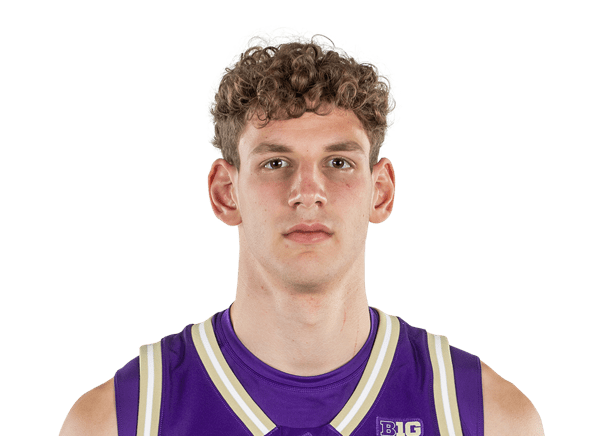
- HT6′10.25″
- WS7′2.25″
- WT248
Strengths
- 1.175 points per possession on drives
- 22% combined rebounding rate
Concerns
- 1.9 Defensive Box-Plus Minutes
- 0.8 assist-to-turnover ratio
High on him
Steinbach rebounded like a center as a freshman, with a 14% offensive and 25% defensive rebounding rate. Among early entrants, no one else exceeded both marks. He also weighs an average amount for a center, at 248 pounds, and is 6’10.25’’ without shoes with a 7’2.25’’ wingspan. Now, add some real perimeter talent into the mix, and this player becomes very interesting.
Steinbach was a threat off the dribble, scoring nearly 1.2 points per possessions on 40 drives, both marks doubling that of fellow one-and-done big Chris Cenac (20 drives, 0.6ppp). Steinbach also shot an excellent 40% on 30 guarded catch and shoot threes and 76% from the line. Those two marks also far outpace Cenac. There is real perimeter potential here, which also shows up favorably in the passing tape.
Steinbach was far from the primary passing hub with Washington, but he was seen greasing the wheels with screening and good decision-making. When Hannes was off the court, 46% of his team’s makes were assisted, while the team turnover rate sat at 18%; when he was on, the assist rate jumped to 50%, with turnover rate declining to an acceptable 15.5%.
The on-offs are quite strong overall for Steinbach. Washington had a disastrous -0.2 net rating on 463 possessions where Steinbach sat, compared to a very strong +19.6 when he played. That impact mostly showed up in the team’s rim finishing, at 65% when he’s on compared to 46% when off. Indeed, Steinbach was an 86th percentile rim finisher, 68% overall and 67% in the half-court – this efficiency was not boosted by farming easy transition looks.
More than anything, Steinbach was simply very productive for a freshman. Of 6’10’’+ high major freshman first round picks since 2008, Steinbach ranks in the top third in Box Plus-Minus, tied with Dereck Lively and Jaxson Hayes. Sometimes, production, age, and signs of advanced skill are enough to make a pick worth it, as Steinbach seems like a clear multi-contract player.
— PowLow on him
20 year old German big-man Hannes Steinbach entered the NCAA as one of the more decorated international prospects in recent years. Standing 6’10.25” (without shoes) with a 7’2.25” wingspan, 9’1 standing reach, and weighing in at 248 pounds, Steinbach is a moderately undersized center prospect who has consistently exceeded expectations placed on his mold of player. Steinbach’s rapid ascent through Germany’s youth ranks was marked by his consistent dominance as an interior presence. Prior to being called up to the first division in Germany Steinbach obliterated the German Pro B, performing as the league’s unequivocal best player over his 12 game stint in the competition. Steinbach led the G Pro B in PER (36.8, with 2nd place coming in at 31.9), was 2nd in TRB% (22.7%), 1st in PTS/40 (32.8 to 30.8), and first in BLK/40 (3.3). The key to Steinbach’s evaluation lies in his positional distinction, whether he can subsist as a part-time center in the league or will be locked into playing as a power forward. In the 2025-26 NBA regular season, aggregate 3PA rate (3PA/FGA) for players with the ‘PF’ positional designation was 43.8%. Steinbach’s career 3PA rate is only 12%. Even without the benefit of a modernized scoring process, Steinbach could provide offensive value purely through his offensive rebounding acumen and playmaking. Again, the issue of Steinbach’s career resume comes into play. Although his impact on the glass has been a consistent presence throughout his career, Steinbach has yet to show meaningful growth as a facilitator and playmaker. Steinbach’s assist-to-usage ratio of 0.37 and assist-to-turnover ratio of 0.80 were both only in the 48th percentile for his position. The lack of passing volume and efficiency not only decrease the likelihood of Steinbach being utilized as a dribble-handoff hub, but also how effective he can become if he does eventually develop a reliable 3-point shot. What makes Steinbach’s projection especially volatile is that he’s prone to becoming position-locked on both offense and defense. Steinbach’s 3.9% block rate ranks in the 35th percentile for drafted prospects at his position since 2008 per draftballr, and his lineup data serves as further evidence that Steinbach’s rim protection is subpar for a potential NBA center. In Steinbach’s 1,477 possessions this season opponents finished 63.2% at the rim, good for 336th out of 365 teams in the country. In the 315 possessions Steinbach was off the court, opponents’ rim finishing fell to 58.3%. Of course, all small sample size caveats apply, but the combination of average positional size with a below average block rate and onerous lineup data is enough to preclude Steinbach from being a positive rim protector in the league. Hannes Steinbach’s raw production over a robust sample of games establishes a high baseline or floor for him at the next level. However, his negative skill intersection of mediocre passing, questionable shooting, and underwhelming rim protection impose a firm ceiling on his projected NBA impact. Although Steinbach’s age-adjusted impact is reminiscent of star prospects from past years, the constraints he will place on lineup and roster construction could prevent him from ever reaching these heights.
— Ahmed
Rank 17.
Darius Acuff
Medium
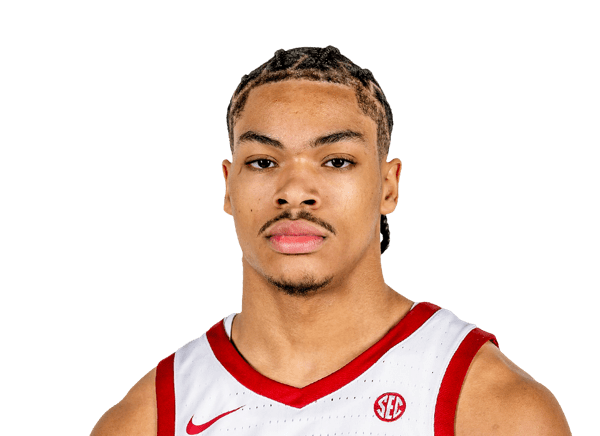
- HT6′2.0″
- WS6′6.5″
- WT186
Strengths
- 60% true shooting on 30% usage
- 32% rate at 3.0 assist-to-turnover ratio
Concerns
- 1.3% steal rate
- 0.0 Defensive Box-Plus Minus (BartTorvik)
High on him
Acuff put up one of the most efficient load-bearing offensive seasons in college basketball history. He also had strongly negative rebounding and stock rates that indicate a devastating defensive floor.
Poor defensive output is not uncommon for guards, however. Two of the best shooters ever, Damian Lillard and Steve Nash, consistently had extremely low defensive rebounding and steal rates throughout their NBA career. The intuitive refutation is that this paradigm presents a narrow path, but perhaps Acuff is suited to make it work.
The best indication would be his passing. Acuff was one of the best lob passers in the country, in transition and out of pick and roll. While this is partially a reflection of his receiving personnel, Acuff’s pin-point accuracy and ability to “initiate” these plays was standout. He ended the season with a 32% assist rate, 11.6% turnover rate, and a sparkling 3.0 A:TO. No underclassman has ever combined a 32% assist rate and sub-12 turnover rate, even at the low major ranks.
Unlike the few players in the modern era that have even come close to pairing such a high assist rate with a low turnover rate, Acuff is not primarily lauded for his passing. It’s certainly an important and accepted part of his game, but it’s somehow discussed secondarily to his scoring ability.
Acuff’s scoring volume and shooting efficiency is itself a projectable value-add: he paired a 30% usage with 60% true shooting. Much of this came from a ridiculous 44% 3P shooting on 207 three point attempts. While we can’t expect this sort of shooting goodness on an annual basis, it speaks to his inherent shooting touch, and is corroborated by high-volume midrange shotmaking and strong pre-NCAA free throw shooting.
Acuff pairs this elite shooting with a legitimate downhill game. With or without a screen, he generates a high volume of paint touches, while also able to push the pace and score efficiently in transition. He had the quickest sprint time at the NBA combine, while measuring well for the position. As such, we can expect Acuff to get to the rim in both the half-court and transition at the NBA level.
At this point, it’s hard to ignore Acuff’s upside as a load-bearing offensive engine. He can pass and avoid turnovers at an elite level, and he can efficiently score at high volume across a variety of playtypes. His 6.7 PRPG (a measure of offensive rating at usage) is the second-highest mark amongst freshmen since 2008, only behind Trae Young.
Acuff’s offensive goodness may reasonably outweigh his defensive badness. Besides, with his elite athleticism and solid frame, perhaps the defensive floor isn’t nearly as bad as his stocks or rebounding would indicate.
— AvinashLow on him
Darius Acuff has a handful of real strengths that should quickly translate to the league, likely involving his mix of methodical scoring, promising shooting, and point guard passing.
There are also a few reasons one might be lower on Acuff than consensus, most exemplified by his defense, or lack-there-of, projecting to be one of the worst defenders in the league. While effective in the right matchups, the way he scores can sometimes resemble a ball-stopper, slowing down the game and slowing down the ball-movement in a negative way to his team’s flow (while Acuff rarely sat, his team’s assist-to-turnover ratio jumped when he left the court). How he creates advantages as an athlete might be more effective against peers at the college level than the NBA level.
Acuff will likely keep his strength going forward, but will that size beat NBA defenders off the dribble as easily against NBA defenses prioritizing stopping him first? Can he be so great offensively, as in the offensive impact of a star-level offensive engine, to make up for what could be the biggest black hole defender in the league?
There is no questioning Acuff’s mentality, toughness, and strong-willed mindset. He delivers for his team as a tough shot maker and assist-maker. The question is if his mix of offensive shot profile, shot creation abilities, and efficiency on higher volume can be scaled up as a primary guard option to star-level offensive impact to outweigh the likely negative defense, to a degree that’s worthy of a high lottery pick and the organizational investment that comes with that.
— RK
Rank 18.
Jayden Quaintance
High
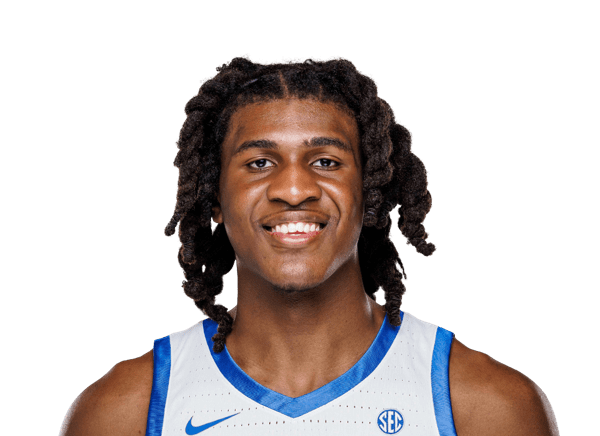
- HT6′9.0″
- WS7′5.25″
- WT253
Strengths
- 9.4% block rate (career)
- 1.3 dunks per game (career)
Concerns
- 45.2% free throw percentage (career)
- 19.4% turnover rate (career)
High on him
Identifying Jayden Quaintaince’s selling points and drawbacks is simpler than almost any other prospect in the draft. As a 17-year-old freshman, he dominated defensively playing for Arizona State, flashing All-Defensive caliber size, explosiveness, movement skills and instincts. Even after a second year in college, Quaintance is still the second-youngest player in the draft.
Quaintance only played four games as a sophomore at Kentucky (most of which did not fare well), good for 28 total college games in two seasons. A March 2025 ACL tear effectively ended his college playing career and zapped a key season of on-court development. Those health-related concerns, paired with general rawness pervading his game, render Quaintance a legitimate risk for front offices.
A brave team stands to reap immense rewards from this Pandora’s Box of an NBA Draft prospect. Quaintance, measuring a gargantuan 6-foot-9, 253 pounds with a 7-foot-5 wingspan, moves like a wing and looks like a fledgling Defensive Player of the Year at his best. Added strength in year two only enhances his elite explosiveness and fluidity.
He must sharpen his footwork, hone his awareness and progress, especially as a pick-and-roll defender, to start at center in the league, but the promise of a switchable, rim-protecting big man exists in his highest outcome range. His blaring red question marks live on offense, none greater than his abysmal free-throw shooting and general touch. Even for a player who projects as a play finisher, a career 45.2 percent free-throw clip is a dire signal.
Quaintance’s offensive flashes shine bright, though, occasionally tapping into brute-force driving and some connective passing instances. His aforementioned two-way strengths are true superpowers typical of players with universal top-five grades. Obvious confounding variables cloud that projection, but Quaintance’s ceiling is too high not to earn a star prospect grade.
— BenLow on him
In 2023, I wrote the following about GG Jackson:
“Drafting GG Jackson would be using a 2023 pick on a guy who likely won’t contribute until at least 2025
I am generally wary of drafting raw and unproductive guys whose high-end outcomes likely won’t give you a star, especially in the first round. It’s why I was lower on Ziaire Williams in 2021, and he had considerably more tangible skill than GG Jackson does. I get the age + height + isolation scoring argument for Jackson. But, he isn’t close to being a positive contributor at this stage. That sort of bet is just not my cup of tea. He could very well end up being a decent player, but I would rather use a mid-late first on someone who is closer to contributing now (or trade that pick for future assets) than draft GG.”
The case for Jayden Quaintance reminds me a lot of GG Jackson back in the day. Both were heralded prospects out of high school who were young for their classes. Both also had real traits to get excited about. GG’s was his fluid movement for his size and isolation scoring skill. Quaintance’s, on the other hand, are his defensive tools and instincts.
Quaintance was in college for two years, and he hasn’t turned 19 yet! As a 17-year-old in 2024-25, he put up a 9.8 BLK%, 2.2 STL%, and 4.2 DBPM. He showed remarkable restraint when it came to fouls, too (1.4 stock/foul ratio). Quaintance’s offense was horrendous, but that defensive ability at his age was enough to intrigue scouts.
I completely sympathize with betting on a young, toolsy, defense-first prospect. Normally, that’s right up my alley. Unfortunately, Quaintance doesn’t give us much room for optimism on offense. I don’t care how young you are, a 54.5 career eFG% just isn’t gonna cut it. Neither is a career 45.2 FT%. Quaintance does show some coordination at times, but his cognitive profile is a far cry from the common point of comparison, Robert Williams, in college.
Worse still, Quaintance has suffered multiple knee injuries already in his young career. There’s just so much risk here, and I’m not sure the juice is worth the squeeze. With his negative offensive projection, you’re banking on DPOY upside here. I said it in 2023, and I’ll say it again: drafting raw and unproductive guys whose high-end outcomes likely don’t give you a star isn’t my cup of tea. Quaintance may end up being a good player, but I’m content letting another team make that swing.
— Michael
Rank 19.
Morez Johnson
Low
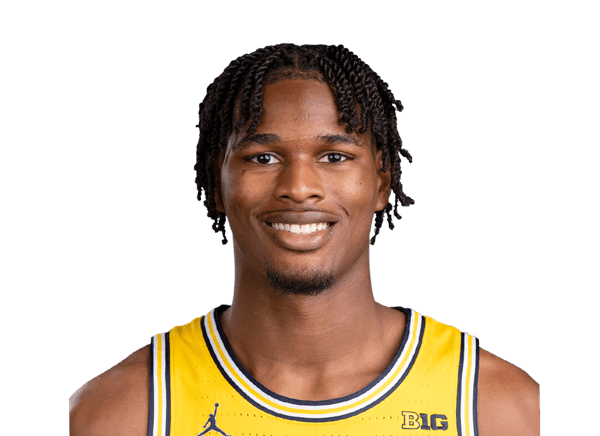
- HT6′9.0″
- WS7′3.5″
- WT251
Strengths
- 99.8 Combine Score (Tawny Park Metrics)
- 73% at the rim in conference play
Concerns
- 6% assist rate (career)
- 70% assisted rate on field goals made
High on him
There are many paths to being a lottery pick. Production, athleticism, positional size, and pedigree have all made lottery cases in the past. When a player has all four, they’re often flirting with the top overall pick. Morez Johnson Jr. has it all and is going to be a steal wherever he is picked.
At 6’9” and 250 pounds, Morez has ideal power forward size. He mixes elite run-and-jump athleticism with short-area burst and movement skills. As a sophomore transfer, he was a crucial piece to a dominant championship team. But it’s the production that truly stands out.
Morez was an elite rebounder, shot-blocker, and rim finisher for Michigan, putting together an excellent play-finisher profile. As a roll man, cutter, and dunker spot finisher, he could make his nut offensively. But it’s the flashes of midrange and three-point touch, capitalizing on mismatches, and the ability to put together one- or two-dribble combos to get into his spots that have me believing in his ceiling.
If Morez were strictly an uber-athletic two-way play finisher, the profile is there. I see much more under the surface that can break the false ceiling. In my view, he’s closer to the top end of the lottery than the bottom.
— CharlieLow on him
The reasons I have to be skeptical of Morez Johnson’s upside moving forward are closely related to my last ‘low’ report on Hannes Steinbach. Both suffer from an especially detrimental negative intersection. Both players possess mediocre positional size for a center, the position best suited for their current skillset, but do not meet the skill threshold for the position where their physical skillset would be elite. The issue for Morez Johnson is that his negative skill intersection is even more pronounced than Steinbach. Morez Johnson was assisted on 70.3% of his baskets last year. This lands him in the 16th percentile amongst drafted prospects since 2010, and his 66.9% assisted rate on two-point baskets is in the 11th percentile for all players who have logged an NBA minute since 2010! Johnson’s dependency on surrounding playmaking talent lands him squarely in the ‘tweener’ category. Although there is reason for optimism that Johnson will develop into a capable spacer, his 12% three-point attempt rate last season was the highest of his career so far. Johnson recorded 36 3PA attempts this past season, after posting only 28 3PA in his previous 112 games. An equally encouraging sign was Johnson’s improvement from the line. Before this season, Johnson had a career FT% under 60% on 457 attempts; in just one season, Johnson elevated his career FT% mark to 72.2%. However, 3PA rate is, in my opinion, the most predictive shooting metric for prospects. Even with Morez on an ascent, the volatility of his shooting projection introduces an uncomfortable amount of risk. Although it is not as muddled as his defensive outlook, Johnson’s defense presents questions as well. When Michigan played top-220 teams their rim defense was worse with Morez on the court than off! Michigan’s rim defense went from 58th in the country in Morez’s minutes to 6th in the country in the 891 possessions Johnson was on the bench. Despite Morez’s impressive height-to-wingspan ratio, his 8’11 standing reach would place him in the 12th percentile for centers. Ultimately, I do believe Johnson will be a productive role player, but for how vaunted this draft class is, I do not think a low-upside proposition like Johnson Jr. should be considered any higher than the bottom end of the lottery.
— Ahmed
Rank 20.
Christian Anderson
Medium
- HT6′1.0″
- WS6′6.25″
- WT180
Strengths
- 94th percentile efficiency on 93rd percentile volume for pull-up shooting
- 188 assists out of pick-and-roll
Concerns
- 20th percentile turnover rate among guards
- 27.3 free throw rate
High on him
Christian Anderson Jr. has some flaws that could severely limit his NBA career and impact. He measured 6’0.75 barefoot at the NBA combine, which is 1.20 inches below the NBA average point guard height. And he plays in a unimposing way.
However, he has a solid 6’6 wingspan, recorded a 40.5 max vertical leap, and had positive agility testing at the combine. These measurements give more hope about his physicality on both ends.
He also excels at scarce skills that can lead to high-level offensive impact. He showed a unique combination of shooting and passing. He shot 42.8% on pull-up threes with volume and deep range and paired it with a pick and roll mastery that has few equals.
All things considered, he has a low but not non-existent chance of reaching a sub-star impact a lá Darius Garland.
— EmilLow on him
Christian Anderson is someone who I’ve largely been on the sceptical side of this cycle. His best skill is his PNR operation. 100th percentile for frequency per Synergy, and incredibly efficient. This fuels excellent pull-up shooting, and he is a creative passer who knows how to read the leverage of his low man.
Where I struggle is how functional this passing will end up being. My two main reasons for this are that he struggles to turn the corner in the pick and roll and touch the paint, and I believe he can struggle with on-the-move passing. These two issues, of course, compound each other: if one can struggle to get to the paint, the need to make jump passes from two feet becomes more common, and he can just look panicked when he has to do this. His passing tape was largely good, but it’s largely from a standstill as opposed to while he is driving. I will say, it’s hard to not be impressed with how excellent he was passing from the top of the PNR.
What does give me a lot of hope is that I think he’s a prime candidate to scale down. He’s an excellent spot-up shooter, he just didn’t get much of an opportunity to showcase this as he had such a high-usage role. But that could be flipped into a pro-scepticism argument. How valuable is scaling down for a guy whose best trait is pick and roll passing and pull-up shooting?
— Joe
Rank 21.
Joshua Jefferson
High
- HT6′7.75″
- WS6′10.75″
- WT246
Strengths
- 27.7% assist rate
- 51.7 free throw rate
Concerns
- 51.7% two point field goal percentage
- 34% turnover rate as pick and roll ball handler
High on him
With Jefferson, we’ve seen steady defensive impact for all four years of college. He had a steal and block rate BOTH over 3 during both years at Iowa State, and a Defensive Box Plus-Minus above five all four NCAA seasons. Where Jefferson’s improved is on offense. His scoring game may not induce a ton of optimism right now. Jefferson’s usage jumped to 27.6% this year from 22.5% the year prior. This corresponded with an effective field goal percentage decrease from 54.9% to 51.7%. In fact, Jefferson’s eFG% dropped to a putrid 43% in conference play.
I’ll concede Jefferson’s scoring dropoff in 2026 was a real issue. The good news? His playmaking took a huge leap from an already strong starting point. Jefferson’s assist rate increased from 19.6% to 27.7% last year to this year. Jefferson’s AST%:USG% ratio was 1:1 in 2026, a mark often reserved for guards, especially at this usage. Databallr also assigns 4.4 rim assists per 100 to Jefferson, good for the 99th percentile in his position.
Jefferson is already one of the best 240-pound passers in the world. He makes quick decisions and passes into tight windows in a variety of actions and situations. He’ll get creative with his deliveries by changing up his arm angles or blending his shooting motions into passes, and create high-percentage shots for teammates in the process.
There’s plenty to worry about with Jefferson. His scoring game likely won’t set the world on fire, and his run/jump athleticism may limit him on defense at the next level. Despite statistical similarities, this is a far cry from the next Draymond Green.
And yet, I have to bet on someone this smart and skilled in a 6’8, 240-pound body to carve out an impactful role in the NBA. Jefferson may not have the upside of some younger, flashier players, but he fits the mold of a player I’m prioritizing this draft to a “T.” I’m looking for elite feel, skill, cognition, and development curves.
— MichaelLow on him
Joshua Jefferson is a guy that it does pain me to fade at this point, largely because his passing speed is one of the few outlier skills in this class. I have worries about how loose his handle is, and this did show up in a relatively high turnover rate. This limits the variety of things he will be able to do from the elbow and short-roll to me, as the ‘scoring’ part of his role becomes more turnover prone.
He also seems to take his layups from quite far from the basket as he doesn’t move people or have much of a decel move. This leads to him having to generate extra force on his attempts, which he simply often clanks off the backboard.
This, coupled with a poor combine that actually does show up on film with regard to his foot-speed and getting beaten off the dribble quite often, is my main reason for fading at this point.
— Joe
Rank 22.
Karim Lopez
Medium
- HT6′8.25″
- WS6′11.5″
- WT222
Strengths
- 53% field goal percentage on runners
- 9.1 Age-Adjusted NCAA-Equivalent Box Plus-Minus (NBL)
Concerns
- 19.6% usage rate at 54.9% effective field goal percentage
- 25% turnover rate on 1 drive possession per game
High on him
Karim Lopez is the player who has probably moved around the most on my board over the last few months. The case for him is that he could just be an incredible driving prospect. I think his potential outlier tool is that he’s quite bendy for someone with his height and weight measurements. He can really get low and fit through gaps that you don’t see as being there. These, at the moment, are largely flashes; I’d like to see more consistency here.
He’s also quite coordinated, and, considering his play-style, he doesn’t appear to be rushed at any point or show signs of his body moving faster than his brain.
This, along with the size on defense, would be the major reasons for him bringing high-end value. He’s simply an incredibly big and strong human being with budding agility skills on offense. If he’s able to scale down to the 3, this is an incredibly valuable player. He does need to get more consistent on defense if he wants to see the floor.
I think him landing on a team with front-court spacing is probably the most ideal thing to his development. The shot isn’t quite there yet, and secondary driving might pop more on a team that has their centers playing outside or at the elbow as opposed to at the dunker spot or as a PNR Roll man.
— JoeLow on him
I really want to like Karim Lopez. There are few obvious holes in his game, as he was a solid rebounder, decent passer and good defensive playmaker. However, what are the plus-value traits that would make him a reliable starter? In fact, will he give his coaches a reason to put him in the rotation?
The upside case is around his driving, but his volume was still quite low for someone who would play on the wing, and he turned it over often when he tried. When he was a ballhandler in transition, he had a 33% turnover rate and only got to the line 8% of possessions. In the not-super-talented NBL, I would hope for better numbers, as well as dominance somewhere.
He is not close to a dominant scorer, only putting up 6 points per game in his minutes with Mexico’s senior team, though he showed more promise in the youth U16 and U15 games. The anthros are good, perhaps giving him a floor of NBA player when combined with his decent production.
But simply put, 63% at the rim, 32% from three and 74% from the line are not compelling signs for his NBA scoring translation. Maybe he becomes a jack-of-all-trades with his good feel for the game and effort, but I am skeptical of high-end outcomes.
— Pow
Rank 23.
Bruce Thornton
High
- HT6′0.0″
- WS6′5.0″
- WT223
Strengths
- 5.5 career PRPG! (usage-adjusted offensive rating), 5th highest for any high major NCAA player with 100+ career games
- 3.0 career assist-to-turnover ratio
Concerns
- 0.56 rim to non-rim field goal attempt ratio
- 1.9% steal rate
High on him
The upside case for Bruce Thornton is easy: the ball goes in the hoop. He hits some truly rarified air when combining shooting volume with efficiency:
202 for 289 on rim attempts (70%)
321 for 661 on non-rim twos (49%)
455 for 549 on free throws (83%)
221 for 580 on threes (38%)
The closest analogue for this four-level scoring was Jalen Brunson (with extremely similar 70% / 47% / 82% / 39% splits), and he falls short of Bruce Thornton’s ball custodian abilities. Thornton has a career assist rate just shy of Brunsons’, but with a much lower turnover rate of only 10.7% (Brunson: 16%). Bruce makes hardly any mistakes on offense, while putting the ball in the basket at historically good rates on high volume.
The defense is a significant question mark, as Thornton has put up Brunson-esque numbers on that end, too. But he’s strong, with a historically high BMI at 233 pounds for a point guard (okay, probably higher than what you’d like), and still got more rebounds and blocks than Brunson did with an average vertical for his position.
Thornton is simply excellent getting to his spots. While I’d prefer a higher rim rate, his middies are an amazing last option for an offensive possession gone wrong. Combine that with his strong table-setting sensibilities with his fantastic assist-to-turnover ratio, and you have a player who can help get good looks for teammates, too.
His efficiency was truly special: 98th percentile efficiency on 141 pick-and-roll ball handler possessions, 91st percentile efficiency on 93 transition possessions, 97th percentile efficiency on 89 spot up possessions, 90th percentile efficiency on 58 off-screen possessions, 94th percentile efficiency on 40 isolation possessions. 98th percentile efficiency on layups and 94th on runners. This is a special scorer.
— PowLow on him
Thornton is an interesting case for me in this cycle. The touch indicators and counting stats suggest he is a player who should be taken seriously in this draft. I don’t doubt that Thornton can be a rotation player in the NBA. When you look at his three-point percentage and see 40% on 155 attempts, while also sporting a 55.7% mark on non-rim twos (per Bart Torvik) on 175 attempts, it’s easy to see why some view him as a player who can come into the league and make an impact as an on-ball primary.
However, when you turn on the film, you see a player who needs a little help getting into the paint, whether it’s through ball screens or coming off pindowns. He often relies on advantages created by the defense rather than consistently generating them himself. So my question with Thornton is: can he get paint touches as a primary in the NBA? I don’t think he can do it consistently enough without help. Because of that, I’m going to fade him a bit. That said, I do think he can help NBA teams as a tertiary player, operating off the ball or attacking tilted defenses.
— Larro
Rank 24.
Chris Cenac
Medium
- HT6′10.25″
- WS7′5.0″
- WT240
Strengths
- +6.75’’ wingspan above height (7’5’’)
- 26% defensive rebound rate
Concerns
- 19.7% free throw rate
- 5.5% assist rate
High on him
A traditional power forward with feel for the modern game, Chris Cenac Jr.’s outlier rebounding instincts reveal an elite skill he can rely on throughout his pro basketball career.
His shooting touch on the midrange pick-and-pop is already a short-roll go-to threat, with potential to stretch out to the 3pt line for more shooting gravity over time. Fundamental post-up moves offer a good counter option for Cenac when finding mismatches down low, or attacking closeouts methodically off pump-fakes to take advantage of that floor-stretching gravity.
Cenac’s wingspan-to-height ratio is 3rd-best in the class, which projects well for him defensively. Connective feel is revealed on both ends as an outlier rebounding talent, a help-side shot-blocker, a good kick-out passer, a grab-and-go ball-handler, and a team-first decision-maker, showing multiple pathways for Cenac to round out two-way impact in his role at the next level around his competitive edge when crashing the glass.
Combining his elite rebounding instincts, promising connective feel, impressive defensive tools and that feathery shooting touch at every level as a modern power forward who can spot some minutes at the five, Cenac flashes real skill indicators and defensive indicators to go with his proven rebounding superpower to thrive as a play-finishing rotation player with upside to develop into a complete NBA starter as a scorer, shooter, and defender.
— RKLow on him
Cenac is another player I wish I were higher on, given supreme athletic gifts and good touch for a player of his size. His rebounding is special, with 26% defensive rebounding rate an elite mark which is validated by powerful movements on tape, making use of his 7’5’’ wingspan and great movement ability for that size. Six three-point attempts per 100 possessions is also fantastic, double the mark of another combo-big in this class with stretch appeal, Hannes Steinbach.
However, I just can’t buy into players who don’t exhibit a good baseline of feel, and I worry Cenac falls below acceptable thresholds. He basically never makes an assist, which is partially a result of his quick trigger whenever he catches the ball in deep midrange. He took nearly twice as many middies as rim attempts, a horrible ratio for a player his size, and was hardly ever able to get to the free throw line. Only John Butler, under 200 pounds, had a worse free throw rate for one-and-done centers.
So then I wonder: what is the upside, exactly? While he had flashes of making the right reads, that will never be a core of his game given the ultra-low baseline he’s starting with. A 2.5% assist rate against top 50 teams (18 games) means the instincts are very far from NBA-starter level. Neither does he amass strong stock rates, with his 2.6% block rate outright bad for a player of his athletic gifts.
Special athleticism is only special when it’s applied: I haven’t seen that yet from Cenac.
— Pow
Rank 25.
Cameron Carr
Medium
- HT6′4.5″
- WS7′0.75″
- WT184
Strengths
- Only high major player with 10 3PA/100, 3% block rate and 40 dunks
- 39.5% on three point attempts off of screens and handoffs (InStat)
Concerns
- 1.6% steal rate
- 2.3% offensive rebounding rate
High on him
The pitch for Cameron Carr is straightforward – a classic tale of basketball talent evaluation: shooting, positional size, length and athleticism. It’s all there for Carr. In his first season at Baylor, which served as his first real opportunity to spread his wings as a college talent, he showcased a special two-way package. In a draft that is somewhat devoid of wing prospects, Carr stands out.
While averaging close to 19 points per game on an efficient 61.8 percent true shooting, Carr launched 10.6 3-point attempts per 100 possessions (37.6 3P%) and led Baylor with a team-high 44 dunks in 33 games. Boasting a 7-foot wingspan and snappy, sudden athleticism, he posted a 3.9 percent block rate, offering plenty of dynamic flashes of weak-side rim protection. Carr and Duke’s Isaiah Evans were the only two high-major players to attempt over 10 triples per 100 possessions, shoot above 35 percent from beyond the arc and maintain a block rate of at least 2.0 percent.
It’s important to start with Carr’s jumper; it’s his strongest trait and the engine powering his offense. He consistently attempted and made tough 3-pointers off movement and off the dribble (nearly 30 percent of his triples were unassisted), and he proved to be a weapon in Baylor’s Floppy action.
Carr’s deep range and high release point give him upside as a perimeter scorer, drawing favorable comparisons to Devin Vassell and Trey Murphy III as recent high-level, jump-shooting wing prospects. It’s routine to see Carr letting it fly from deep with a foot on a logo, shooting over the top of a contesting defender. According to CBB Analytics, Carr shot nearly 38 percent on NBA-range 3-point attempts this past season on impressive volume (178 3PA).
Given his quick-trigger accuracy and deep range, Carr forces hard closeouts and attacks explosively off the catch. He can pump-and-go with minimal load time, slashing into the second level of the defense and consistently beating rotations with his burst. As he adds strength, Carr will become even more adept at navigating these waters – driving into contact with greater force and balance. Added strength should also bolster his midrange scoring, an area where he has shown comfort despite currently posting so-so efficiency numbers.
Carr doesn’t offer much as a playmaker, though he’s capable of running an empty-side pick-and-roll, and his off-ball movement bends defenses to open up lanes for teammates. However, his passing and half-court decision-making remain inconsistent. When pressured in ball-screen actions, Carr’s timing and accuracy can become erratic. He occasionally lofts blind passes into traffic or forces cutters to adjust mid-stride to handle inaccurate deliveries.
These challenges put a limitation of sorts on his offense, but in an environment with NBA-caliber spacing and gravity — and a role tailored to his strengths in shooting, cutting and relocation – Carr projects as a productive role player with scoring upside. Ultimately, he possesses the tools to scale up his volume and provide substantial scoring punch alongside elite floor-spacing.
Much will be made of Carr’s slender frame…and rightfully so. Weighing just 185 pounds, he’s exceptionally lean and routinely struggles with contact on both ends of the floor. This isn’t to say he shies away from physicality, however. Carr is willing to mix it up, but he currently lacks the functional strength to hold his ground. In Baylor’s early-season matchup against St. John’s, Carr was repeatedly knocked off-kilter by Zuby Ejiofor and Bryce Hopkins, yet he consistently got back up and continued to play. That competitiveness is a notable indicator for his long-term developmental arc. Give me a prospect who isn’t afraid of the challenge, and let’s see if we can develop him to physically handle those moments.
While core strength may never be a defining feature of his game, Carr’s frame should allow him to fill out and carry functional weight. If he bulks up, Carr will better withstand contact on both ends, particularly during screen navigation on defense, where his length can make him a major pest in rearview pursuit. Added strength will unlock the most prolific features of his game, allowing his shot-making and disruptive defensive playmaking to truly shine.
Carr possesses the recovery tools to absolutely delete shot attempts around the basket or contest out to the perimeter. He explodes off the floor, and his exceptional length is a legitimate game-changer. As modern NBA defenses prioritize multi-player rim protection and gap-heavy schemes to bother ball-handlers, Carr’s wingspan and athleticism make him a candidate to excel in these structures – if he’s able to dial in. While he must improve his overall attention to detail, the raw tools are undeniable for him to pop as a high-impact team defender while providing scalable multi-level scoring on offense.
— BrianLow on him
Cameron Carr is an extremely valuable archetype: a high-volume three-point shooter with defensive potential and some on-ball juice. He scored a perfect 100 in Tawny Park Metrics’ Combine Score, with a 7’0.75’’ wingspan, 42.5 inch max vertical and 97th percentile lane agility score. This mold makes people think he could have a Trey Murphy-esque impact in the pros.
My concerns are several. First, he is skinny: really skinny. 184 pounds is in the 12th percentile for a shooting guard, and it shows on tape. Despite blocking many shots, Carr is easily put under the rim when forced to mix it up inside. Baylor’s rim frequency allowed goes up slightly when he’s on, but they allow a hideous 68% rim shooting when he’s on compared to 57% when off.
Second, he does not use those athletic tools to get steals. While Baylor did not turn their opponent over often overall, his 1.6% steal rate was only average for his team. Carr does not have the instincts to jump passing lanes or hand-eye coordination to swipe the ball away, underutilizing that extreme wingspan.
Additionally, and related, he is not a good passer. He’s not a bad passer, but 13.7% assist rate is uninspiring for someone where the pitch is partially on-ball juice. He ran some pick and roll with decent efficiency, and the team assist-to-turnover ratio improved when he was on the court, signaling not all is lost. But we again fall short of calling Carr a particularly high feel player.
The greenest flag of all is Carr’s driving stats, where he scored an extremely good 1.225 points per possession on 80 drive possessions. This is not the highest volume, but shows a player who is indeed able to exert pressure on the defense with the ball in his hands. But his extremely low BMI will make that translation much harder in the pros.
It’s tough to fade a player with his three point volume and athletic gifts. However, Carr is also already 21 years old, 22 before year-end, and therefore is a little behind the curve as far as shoring up his skill deficiencies (the poor steals rate and mediocre passing, especially). That’s not a player I want to bet on high in the draft, particularly if he’s highly likely to be pushed around.
— Pow
Rank 26.
Nate Ament
Low
- HT6′9.5″
- WS6′11.5″
- WT211
Strengths
- 57.8 free throw rate
- 3.2 drive possessions per game
Concerns
- 52% finishing at the rim
- 7.9 threes per 100 possessions
High on him
People might be over-thinking Ament: he is tall, he can dribble, and he has decent feel for the game. The strongest signal for his feel is his free throw drawing: on 113 drives which ended possessions, he got to the line 25% of the time, compared to an only 12% turnover rate. Those are great figures, slightly better than Cameron Boozer’s 24% and 13% on the same kind of volume. This guy is 6’10’’ and can get into the teeth of the defense, even if he has serious flaws as a play finisher.
While the low report here decries his three point volume as too low, 7.9 threes per 100 possessions is still higher than Ace Bailey, Jaren Jackson or Paolo Banchero. His 79% free throw percentage points to some promise as shooter as well.
Ament will need to figure out his inside-the-arc scoring (43% from two…woof) to avoid being a true bust, but he does project as a decent defender to help shore up that. He appears to be a high motor player, managing to get stocks despite Tennessee’s more risk-averse defensive posture (he only fouled 2.7 times per 40 minutes).
I get the instinct to stare at Ament’s 52% rim finishing and heavy reliance on deep twos for scoring. But this might be a true wing spacer at 6’9.5’’ in socks who can keep your defense intact. There’s a point in the draft where that’s worth a shot in ironing out the flaws.
— PowLow on him
Ask yourself this: what skill can Nate Ament lean on to break into the league?
The former five-star recruit was billed as a tall shooter with immense self-creation potential. None of that translated at Tennessee. His volume wasn’t there from distance (7.9 threes per 100), nor was the efficiency (33.3%). For a 6’10” forward, shooting only 52% around the rim is pretty embarrassing; the aversion to physicality jumps off the tape, and he doesn’t have the finishing touch to overcome that. The midrange game wasn’t an outlet either, making 37% of his long twos. His free-throw drawing was less about craft and more about being built like a pile of matches.
With little to offer defensively, I seriously question what Ament can do from day one to justify NBA minutes. He doesn’t profile well on or off the ball offensively in the short term. Everyone likes the theoretical upside guy until it’s time to play him for the thousands of minutes it takes to develop. Which team has the time to do that?
If a team like Dallas, Brooklyn, or Sacramento wants to use their second pick in the 30-40 range to get him in the door and give him a long runway, I don’t hate the gamble. But a team picking anywhere near the lottery would be making a colossal mistake banking on Ament turning things around.
— Charlie
Rank 27.
Koa Peat
Low
- HT6′7.0″
- WS6′11.25″
- WT245
Strengths
- 53 dunks
- 1.6 assist-to-turnover ratio
Concerns
- 1.3% steal rate
- 1.1 three point attempts per 100 possessions
High on him
The Koa Peat evaluation seems to have gotten unnecessarily complicated: this is a great athlete with some ball skills. A 17% assist rate to only 13% turnover rate is extremely good for someone playing power forward.
Arizona was an elite basketball team against the NCAA’s best competition, regardless of whether Peat was on the floor or not, with his lineup boost mostly coming from improving their rim rate from 33% to 43%, with rim finishing going from 55% to 62% (vs. top 150 teams). Peat was doing for lineups what he was supposed to be doing: going at the rim.
Peat has strong transition influence, where Arizona only took 13.3 transition looks per 100 possessions when he was off, compared to 19.4 when he was on. That improvement is generally limited to ball-handling transition-pushers, encouraging for a PF.
The biggest concern is Peat’s very poor stock rates, counteracting my claim of him being a great athlete. That certainly has to improve, with a puny 1.3% steal rate and poor 2.5% block rate for his athleticism. However, he had about double those in AAU ball, suggesting maybe he just needs some more time for it to click as he ages.
Peat is an easy over-think candidate, as it’s easy to blow up the flaws and look at a poor outside shooter who can’t function as a guard. But I would be wary of writing off a player with his vertical talents who has any on-ball potential. The runway will be long, as Peat will be athletic and skilled enough for minutes as he figures the rest out.
— PowLow on him
Koa Peat is very confusing. He’s young, already has an NBA body, a pretty impressive pre-NCAA career, and fits a pretty attractive mold as a high-feel, athletic forward who finishes well.
Not really projecting as a shooter and being heavily assisted is a negative, but it’s not a death sentence for his archetype. Where it starts to get weird is the application of his feel and physicality. The major benefit of the non-shooting “point forward” is usually guard-adjacent DTOV and big-adjacent DREB influence. Koa simply doesn’t provide that, with a 12% DREB% and 1.3% STL%.
Arizona does possess elite individual rebounders and is a rather conservative scheme, but that still doesn’t excuse Peat hitting an Acuff-like DREB/STL intersection.
Peat did get rebounds and steals in AAU, so there’s some hope in that regard, but it’s still a super-unconventional mold that I don’t feel comfortable projecting as an impact player.
— Lukas
Rank 28.
Zuby Ejiofor
High
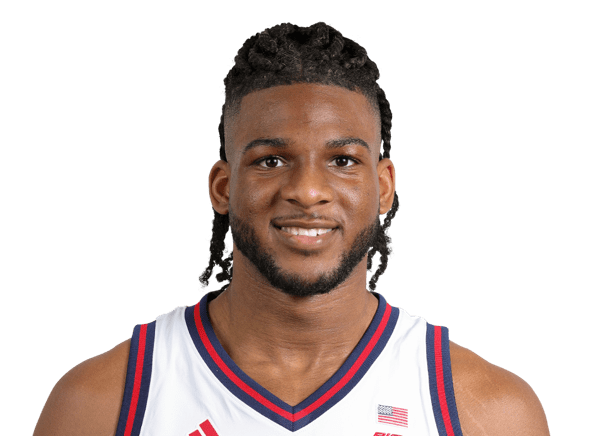
- HT6′7.5″
- WS7′2.0″
- WT245
Strengths
- 15 blocks on three point attempts (CBB Analytics)
- 4.0 shooting fouls drawn per 40 minutes (CBB Analytics)
Concerns
- 14% defensive rebounding rate (career)
- 1.9% steal rate (career)
High on him
There are certain inarguable truths to Zuby Ejiofor’s game. He’s a tough, rugged defender who offers both positional and scheme versatility, while providing reliable interior finishing and connective frontcourt passing. When you blend his multiple years of efficient, highly impactful two-way production in college with his impressive combine measurements – a 7-foot-2 wingspan and an 8-foot-11 standing reach – there’s a clear framework for a player who can crack an NBA rotation as an energy guy and defender.
Players who fit this mold are highly valuable in the regular season. They’re reliable rotation pieces who defend, battle on the glass, keep the ball moving on offense and avoid costly mistakes. While Ejiofor is big enough to hold his own in NBA frontcourts, he slightly lacks the elite measurables typical of starter-level bigs who don’t offer perimeter gravity.
This may ultimately be where Ejiofor lands, but pigeonholing him as a small-ball 5 who only injects some verve into a second unit during the six-month regular-season slog is too narrow in scope. More specifically, that outlook undersells his feel for the game and overall skill level, both of which are exceptionally high.
Ejiofor can handle the ball in space, make passes in tight windows (both out of the short roll and from the post), and initiate 5-out offenses from the elbows or top of the key. Instead of typecasting him as merely a 6-foot-8 center designed to eat innings, we should consider what Ejiofor could become as a versatile 4 or a powerful wing.
He shot just 27.7 percent on 2.3 3-point attempts per 100 possessions over his four-year college career, according to Sports Reference. However, as a senior – while anchoring a borderline Top 10 defense as the Big East Defensive Player of the Year – Ejiofor took a leap as a shooter. He knocked down 18 3-pointers (18-of-59 3PA), including a few self-created looks (three unassisted triples), and shot 43.4 percent on 2-point attempts away from the rim, per CBB Analytics. He’s also consistently been a reliable free-throw shooter, hitting 70.9 percent from the line for his career.
For now, Ejiofor’s 3-pointer remains a limiting factor of sorts despite those encouraging indicators. There’s reason for optimism, however; with technical refinement and a scaled-down offensive role (down from his heavy 26.5 percent usage rate this season), he could develop into a functional spot-up threat. Unlocking that jumper would allow the other areas of his game to truly blossom. That upside is exactly what makes him one of the premier “if he shoots it” prospects in this class – the kind of hybrid frontcourt athlete who can play alongside a traditional big.
Defensively, he’s already there. Ejiofor was the linchpin of an aggressive, switch-heavy defensive unit at St. John’s. He consistently demonstrated the ability to slide out and guard every position along the perimeter, showcasing remarkable fluidity for a 245-pounder. He carries his weight exceptionally well and moves laterally in space. Also, Ejiofor doesn’t check out of a play after containing the initial action; he immediately shifts into a relentless, disruptive gap defender who uses his long arms and quick hands to stunt, dig, and terrorize nearby ball-handlers.
While he may not be the most explosive, quick-twitch athlete, Ejiofor utilizes a 38-inch vertical, elite length, a motor that runs hot, and sharp instincts to anchor himself as an impactful weak-side rim protector. During the 2025-26 season, he posted a 7.2 percent block rate, highlighted by a staggering 15 blocks on 3-point attempts. That translated to 0.5 blocks on 3PA per 40 minutes – putting him in the 99th percentile nationally.
To put those numbers into perspective, Cooper Flagg blocked just seven 3-point attempts at Duke last season, while Hannes Steinbach rejected eight at Washington this year. Even Yaxel Lendeborg, who helped propel the defense for the national champs, led his team with only nine blocks on the perimeter. Meanwhile, Allen Graves proved how rare Ejiofor’s spatial coverage is: all 33 of the blocks Graves recorded at Santa Clara last season, according to CBB Analytics, came strictly on 2-point attempts inside the arc.
The offensive side of the floor is where things get more intriguing. Ejiofor can generate and initiate offense for both himself and others from beyond the arc; he doesn’t rely on preexisting advantages to score or function as a connective playmaker, nor does he require his touches to come strictly within 15 feet.
He plays with fluidity and force as a driver. Ejiofor can face up and blow by slower defenders along the perimeter, or utilize physical, Barkley-style backdowns when he draws a physical mismatch. Front offices searching for perimeter physicality – such as the Charlotte Hornets – should closely consider these facets of his game, especially when envisioning the various ways Ejiofor could work as a source of offense in a variety of modern conventions.
Whether it’s Pistol action in early offense or playing out of “flow” as the shot clock dwindles, Ejiofor can function as a highly effective screener who dictates matchups and creates micro-advantages for primary creators. If defenses try to switch and flatten the offense, Ejiofor serves as a reliable switch-beater, capable of driving through or backing down more slender defenders.
Of course, if those actions pull a second defender into Ejiofor’s space, he has the vision to make quick decisions and pass on the move. This generates some of the highest-value looks on the floor: assisted opportunities directly around the basket and open kick-out three-pointers.
— BrianLow on him
Ejiofor is normally a player I go for: versatile, big, athletic, with some on-ball juice for a guy his size. However, I find myself uninspired whenever I visit his profile or tape.
Recency bias is a real issue in draft work, but Ejiofor’s final college game is still instructive: in the most important game of his life, Zuby was unable to be effective. While he had a great passing game (6 assists to 0 turnovers), he was forced into tough midrange looks which did not go in, had fewer stocks than normal (2 compared to 3.3 average), and only four defensive rebounds. That last point is my biggest concern: why does a player with a 7’2’’ wingspan, 245 pounds in weight, with a 34 inch standing vertical and elite agility times, never rebound? Ejiofor’s 14% defensive rebounding rate more closely resembles a guard than a big. At 22 years old, this is not a conversation we should be having.
If I’m drafting a player of this age in the first round, I need them to be dominant at the NCAA level. Ejiofor’s +9.2 RAPM grades out as 28th best this season – not bad, but far from dominant (Yaxel, by way of comparison, was at +14.9). Ejiofor’s main weakness might be how he’s lacking a single high-efficiency shot distance: 66% at the rim is not great for a big, 42% from midrange is fine, 72% from the line and 31% from three are fine. But fine doesn’t do it when you’re trying to defend your playing time in the NBA. When you play Zuby in the big leagues, what is forcing you to do so?
The answer is the versatility, as Ejiofor blocks a lot of shots, got to the line a lot, crashed the offensive glass and moved the ball well (23% assist rate, 1.7 assist-to-turnover ratio. But the lack of strong scoring from anywhere and disastrous defensive rebounding are enough to scare me away from Zuby as a first rounder. If he can’t rebound like a big, shoot like a guard or even wing, and is a bad finisher for a big…where’s his home?
— Pow
Rank 29.
Tarris Reed
Low
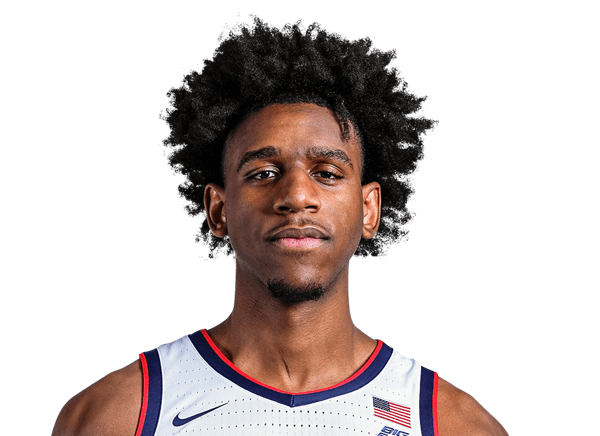
- HT6′9.75″
- WS7′4.25″
- WT264
Strengths
- 24% defensive rebounding rate
- 6.4% block rate
Concerns
- 1 for 7 on three-point attempts (career)
- 0.7 assist-to-turnover ratio (career)
High on him
Tarris Reed is a guy that I was very happy to see sneak inside the top 30 of our Swish Theory board. At the next level, I view Tarris Reed as a strength-based play finisher. I think UConn’s heavy off-screen offense gave him a lot of easy and deep seals just because all of the help defense would be pulled to the top of the key to defend off-screen threes. However, Tarris is strong inside and can move his man not once, but twice.
It is for this reason that I get slightly frustrated that he sometimes rushes his shots at the rim. I get it with skinnier guys who can’t sustain or even create a second advantage. But he legitimately can. He’s a smooth operator in PNRs despite his limited vert. I think he fits really well next to a guard who has a threat of a pull-up 3; he’s more at home in the short roll as opposed to as a lob threat. It allows him to use his power, and he’s lowkey a really decent short roll passer.
Defensively, he’s just really solid. I don’t think he’s a game-changing force, but he’s a solid rim protector, and due to his offensive skill you could potentially play him alongside another big. When making a pick like this, teams need to think about fit way more than they do for players at the top of the draft. The case for him isn’t particularly exciting, but I think alongside pull-up shooters, he can be a seriously good addition to your team.
— JoeLow on him
Tarris Reed is another player I can’t get excited about. While he turned in an excellent two seasons for UConn (8.4 Box Plus-Minus as a junior and 11.6 as a senior), he is the beneficiary of a system which maximizes its talent. Against top 150 teams, UConn had essentially the same net rating whether Reed was on or not. The team got to the rim a lot more, where it finished at the same okay rate, but also allowed many more rim attempts, though with poor rim finishing allowed regardless. When you’re betting on someone about to turn 23, there should be little doubt on NCAA impact. As #29 in NCAA RAPM, Reed’s game does not appear free of consternation.
The rebounding was indeed as dominant as you could hope for a 264-pound player with a 7’4.25’’ wingspan. The block rate is very good as well. But with zero spacing capability on offense – a 58% free throw shooter and poor midrange finisher over his college career – Reed is position-locked as a five. While his passing went from a ruins-NBA-odds-alone 4.4% assist rate to 23% turnover rate as a sophomore with Michigan, his assist rate has climbed up to 18% this season. That makes Reed looks like a wing when he plays, but he is again a major beneficiary of UConn’s top 10 in the country assisted rate system. The taller Donovan Clingan, for example, sported a better 1.9 assist-to-turnover ratio, compared to 1.2 for Reed, and as a sophomore compared to senior.
Reed is a great athlete who will be a great NBA rebounder. But where is the opportunity for upside, when he is a non-spacer with questions on feel? I would feel more comfortable with Reed as a first rounder if he had some influence on forcing defensive turnovers, but that rate declines when he’s on the court. The lack of dominance – there shouldn’t be these kinds of lingering questions for an older senior – make Reed a very risky bet to close the first round.
— Pow
Rank 30.
Meleek Thomas
Medium
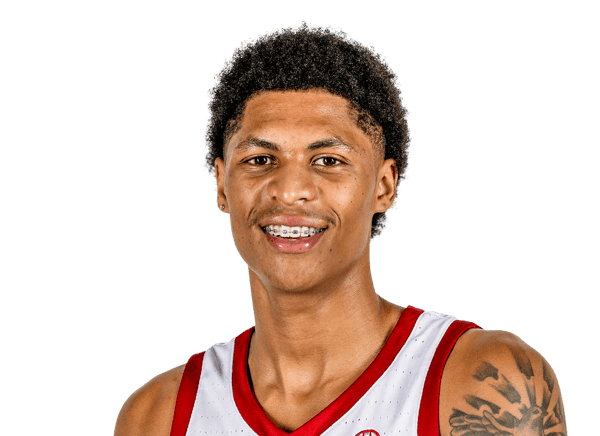
- HT6′3.0″
- WS6′6.75″
- WT190
Strengths
- 2.8% steal rate
- 42% three-point attempt rate
Concerns
- 45% two-point field goal percentage
- 3 for 5 dunks on the season
High on him
When you look up a walking bucket in the dictionary, you see a picture of Meleek Thomas crossing over his defender.
Resembling a classic sixth man scorer who can catch fire at any moment, Meleek is a smooth off-the-dribble scorer and sound 3pt shooter who shows read-and-react assist-hunting passing chops as a combo guard ready to score first and ask questions later.
Meleek’s superpowers show up through his self-creation abilities, between his handle, scoring, and shooting. A tough shot maker with a highlight-worthy one-on-one game, Thomas shows off flashy handles, clean finishes at the rim, and impressive 3pt shooting in both pull-ups and catch-and-shoots.
Despite some questions defensively as an individual perimeter defender when left on an island, he shows good feel traits such as by jumping passing lanes for steals. A team could bet on Meleek as a scalable offensive talent who has upside on the ball and proven talent off the ball with two-way feel to build around.
— RKLow on him
Meleek is a player I watched this year, and thought could put things together and, with more consistency, build a late-lottery case for himself. When you watch the film, there is plenty to like, particularly when it comes to his shooting ability off the catch. He made 85 of his 135 catch-and-shoot attempts, good for 37%. Defensively, he was fourth on Arkansas’ roster with 63 total stocks (56 steals and 7 blocks).
The reason I’m probably lower on him than most comes down to one word: consistency. I think this is a player who, if he buys into a tertiary role at the NBA level, could be quite impactful and help teams win. But until he shows he can embrace that role and prove he can be consistent, I’m comfortable being wrong if it means I was too low on Meleek.
— Larro
Rank 31.
Henri Veesaar
Low
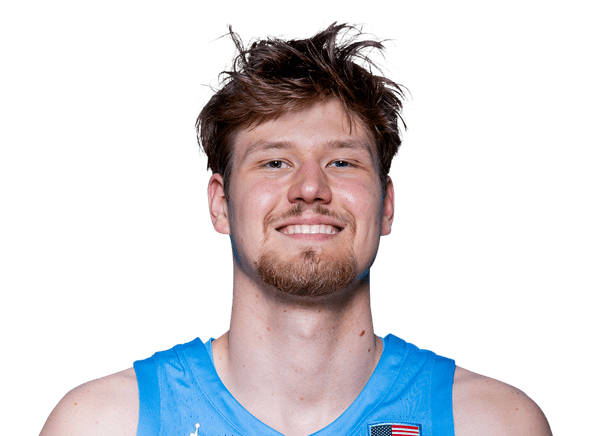
- HT6′11.25″
- WS7′2.0″
- WT227
Rank 32.
Sergio De Larrea
High
- HT6′6.0″
- WS6′9.0″
- WT204
Rank 33.
Ja’Kobi Gillespie
Low
- HT5′11.75″
- WS6′4.0″
- WT182
Rank 34.
Isaiah Evans
Low
- HT6′5.5″
- WS6′8.75″
- WT186
Rank 35.
Trevon Brazile
Low
- HT6′9.5″
- WS7′3.75″
- WT226
Rank 36.
Richie Saunders
Low

- HT6′5.0″
- WS6′8.75″
- WT205
Rank 37.
Rafael Castro
Low
- HT6′9.0″
- WS7′1.25″
- WT224
Rank 38.
Braden Smith
Medium
- HT5′10.25″
- WS6′3.25″
- WT167
Rank 39.
Tamin Lipsey
Low
- HT6′1.0″
- WS6′5.0″
- WT195
Rank 40.
Alex Karaban
Medium
- HT6′6.75″
- WS6′11.0″
- WT225
Rank 41.
Ugonna Onyenso
Medium
- HT6′11.0″
- WS7′4.75″
- WT237
Rank 42.
Nate Bittle
Medium
- HT7′0.5″
- WS7′5.75″
- WT252
Rank 43.
Baba Miller
Low
- HT6′10.5″
- WS7′1.75″
- WT208
Rank 44.
Oscar Cluff
Low
- HT6′11.0″
- WSN/A
- WT255
Rank 45.
Duke Miles
Medium
- HT6′2.0″
- WSN/A
- WT188
Rank 46.
Tyler Nickel
Low
- HT6′6.0″
- WS6′8.5″
- WT217
Rank 47.
Ryan Conwell
Low
- HT6′2.0″
- WS6′7.0″
- WT215
Rank 48.
Maliq Brown
Medium
- HT6′8.0″
- WS7′0.75″
- WT217
Rank 49.
Darrion Williams
Low
- HT6′4.5″
- WS6′6.5″
- WT236
Rank 50.
Tucker DeVries
Medium

- HT6′7.0″
- WSN/A
- WT225
Rank 51.
Emanuel Sharp
Low

- HT6′2.75″
- WS6′3.0″
- WT208
Rank 52.
Dillon Mitchell
Low
- HT6′6.75″
- WS6′10.5″
- WT202
Rank 53.
Izaiyah Nelson
Low
- HT6′8.25″
- WS7′2.5″
- WT219
Rank 54.
Jack Kayil
Low
- HT6′3.5″
- WS6′5.5″
- WT185
Rank 55.
Quadir Copeland
Low
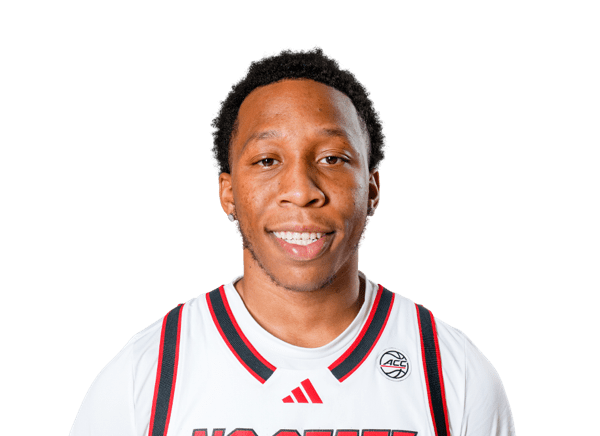
- HT6′6.0″
- WS7′0.0″
- WT220
Rank 56.
Jalen Washington
Low
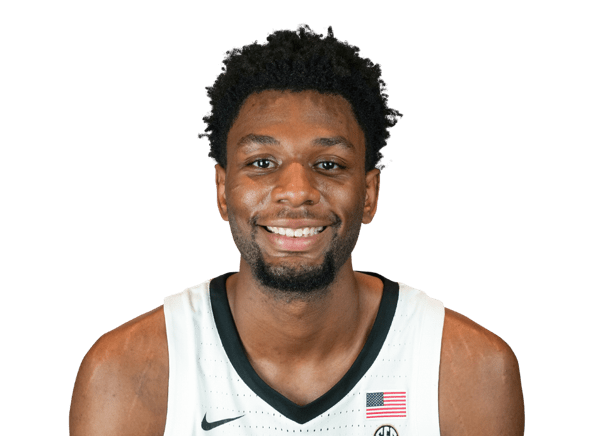
- HT6′9.0″
- WS7′4.0″
- WT245
Rank 57.
Aaron Nkrumah
Low
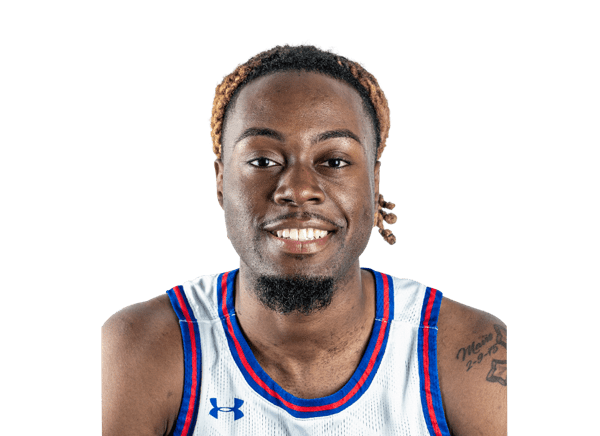
- HT6′5.0″
- WS6′10.25″
- WT189
Rank 58.
Otega Oweh
Low
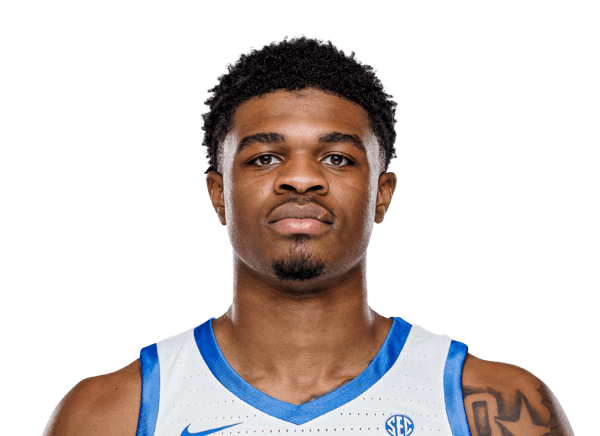
- HT6′4.25″
- WS6′8.25″
- WT216
Rank 59.
Chad Baker-Mazara
Low
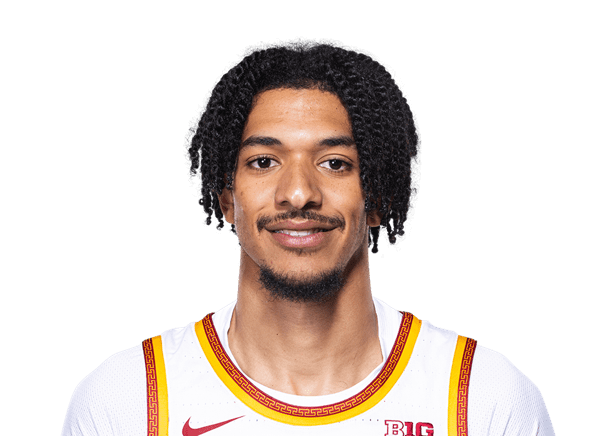
- HT6′7.0″
- WSN/A
- WT185
Rank 60.
Nick Martinelli
Low
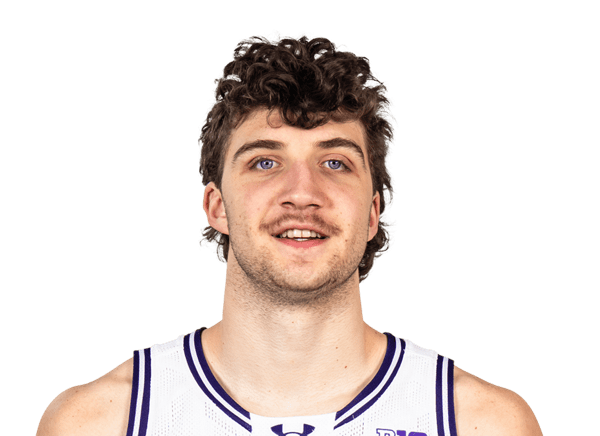
- HT6′6.5″
- WS6′10.0″
- WT224
No players match these filters.